
Built to CE, UL or CSA standards
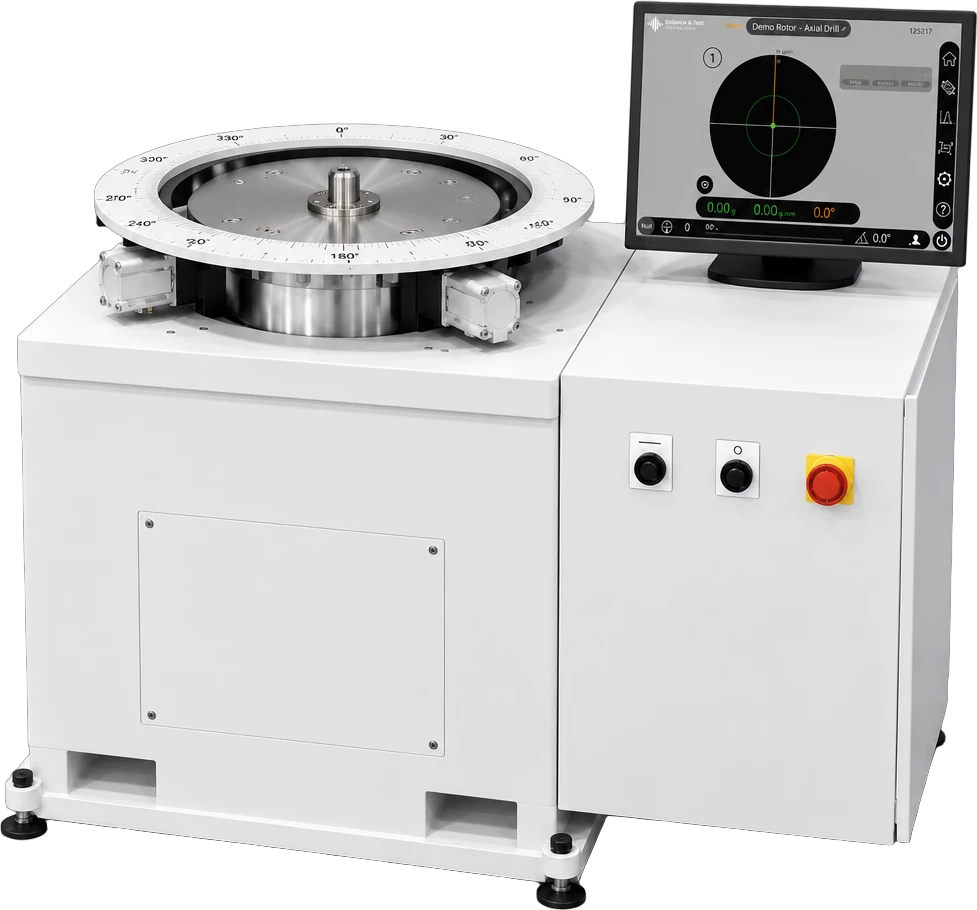
Simple static balancing machines for disc-type rotors, with manual and automatic options, backed by up to a 3-year warranty. The part sits on a sensitive pivot suspension and nothing is spun, which suits aircraft wheels, brakes, couplings, fans, grinding wheels and train wheels up to 500 kg / 1,100 lbs. Built to CE, UL or CSA standards to suit your market.
Overview
Built for the part.
Our static balancers are vertical, non-rotating machines that measure unbalance in a single plane. The part sits on a sensitive pivot suspension and the machine measures how it tilts, so nothing is spun. Single-plane balancing can also be done on a rotating vertical machine where the part needs spinning. Non-rotating machines suit disc-shaped, bladed or large rotors that need correction in one plane, and parts where spinning is impractical or windage would upset the reading.
These machines are engineered for fast measurement cycles with simple load and unload handling, making them ideal for both low-volume workshop use and integration into higher-volume production cells. Automation options are flexible: machines can be run manually, fitted with lift-lower handling systems, or integrated into an automatic cell to reduce manual intervention.
Correction is usually manual, with operators adding or removing material. Tooling is arbor-based and simple: it lifts on and off easily and can be configured for a wide range of wheels, brakes, couplings and fans.
Applications
Where it works.
Key features
Accurate. Robust. Simple.
Every machine is proved to ISO 21940-21 before it ships.
Engineered for continuous industrial use
Manual and automatic machines available
Industry leading on new machines.
Measuring system
Measure, correct, certify.
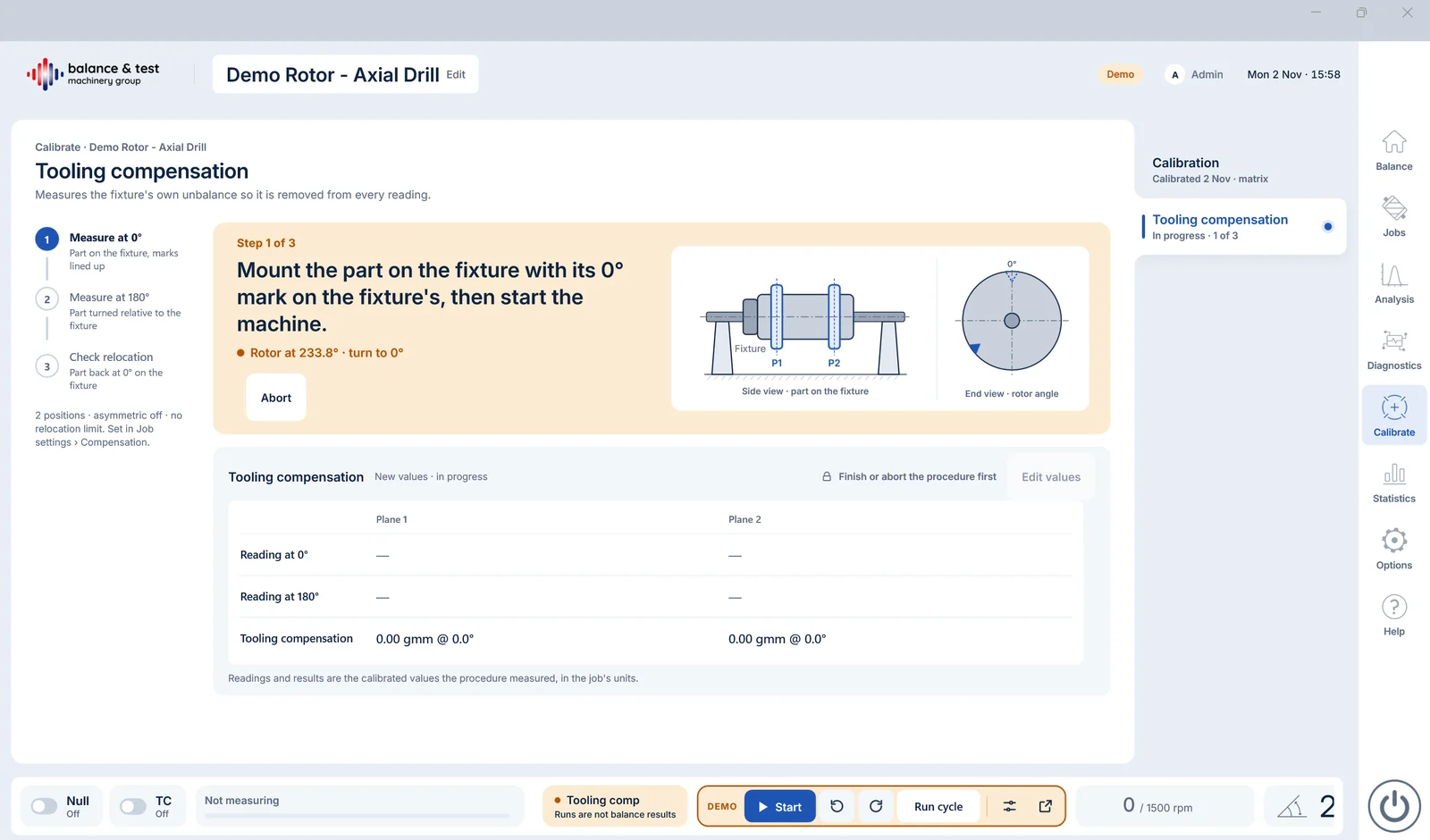
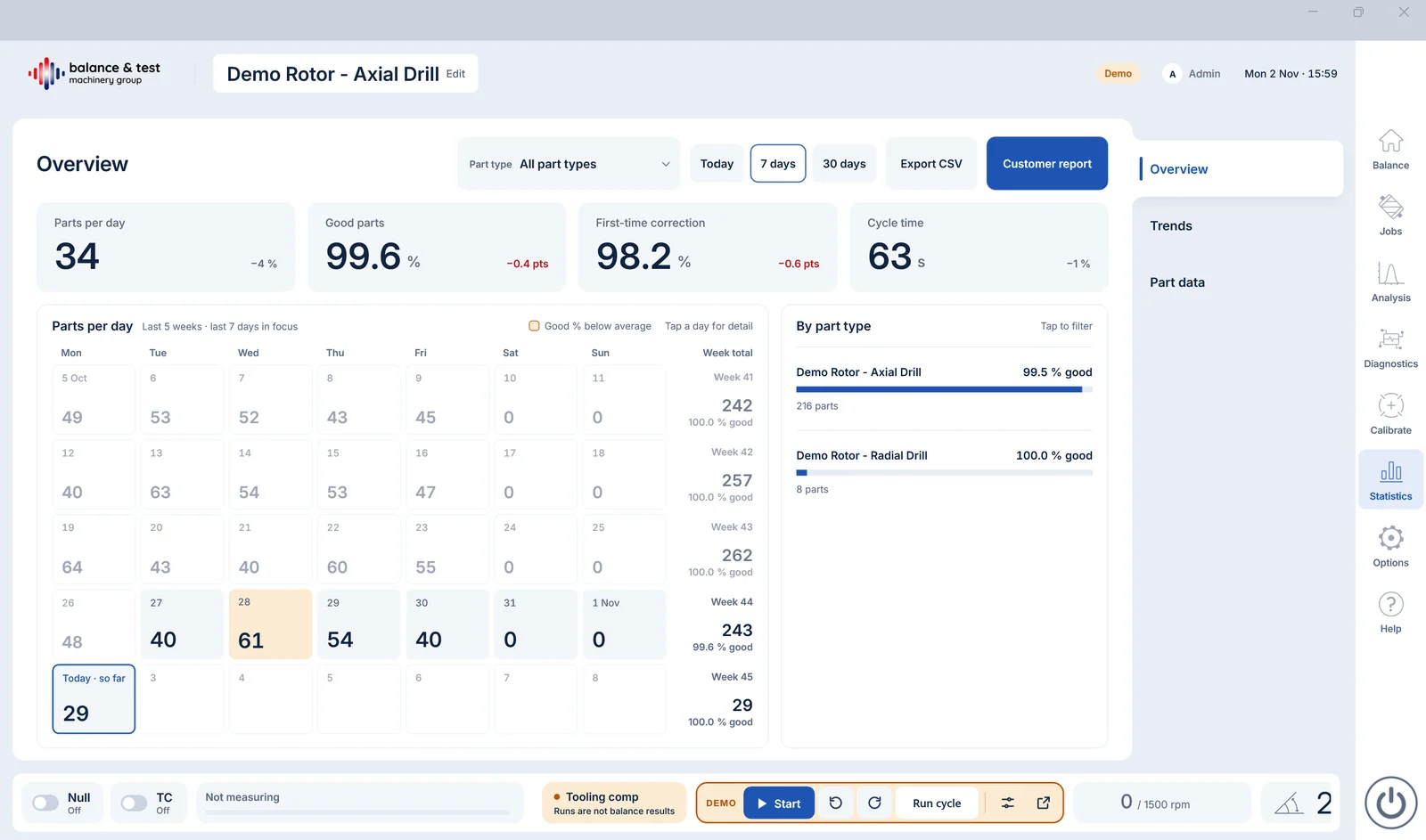
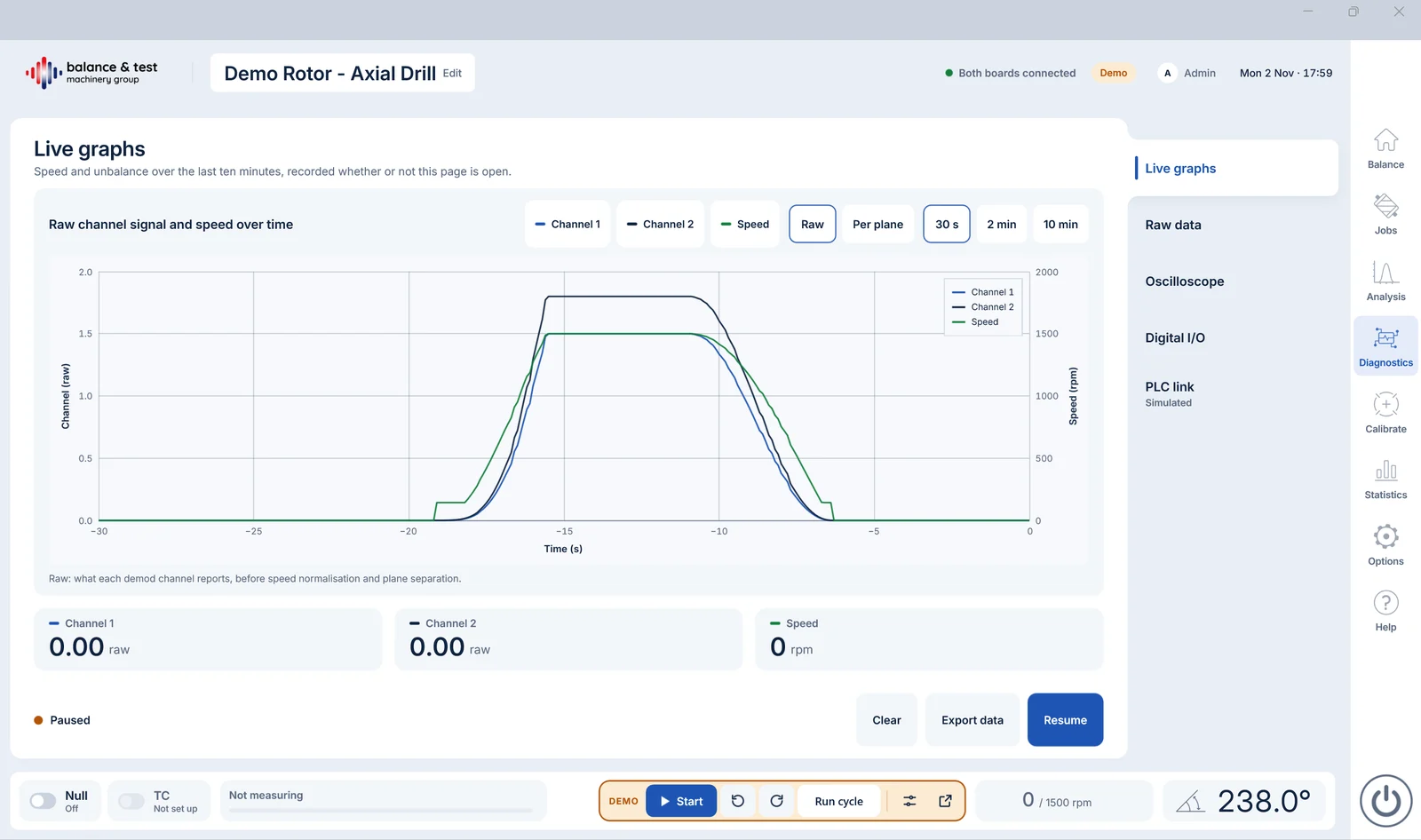
Our fifth-generation measuring system: dedicated electronics that measure unbalance with extreme accuracy, connected over Ethernet to the UltraX balancing software.
01 / 06
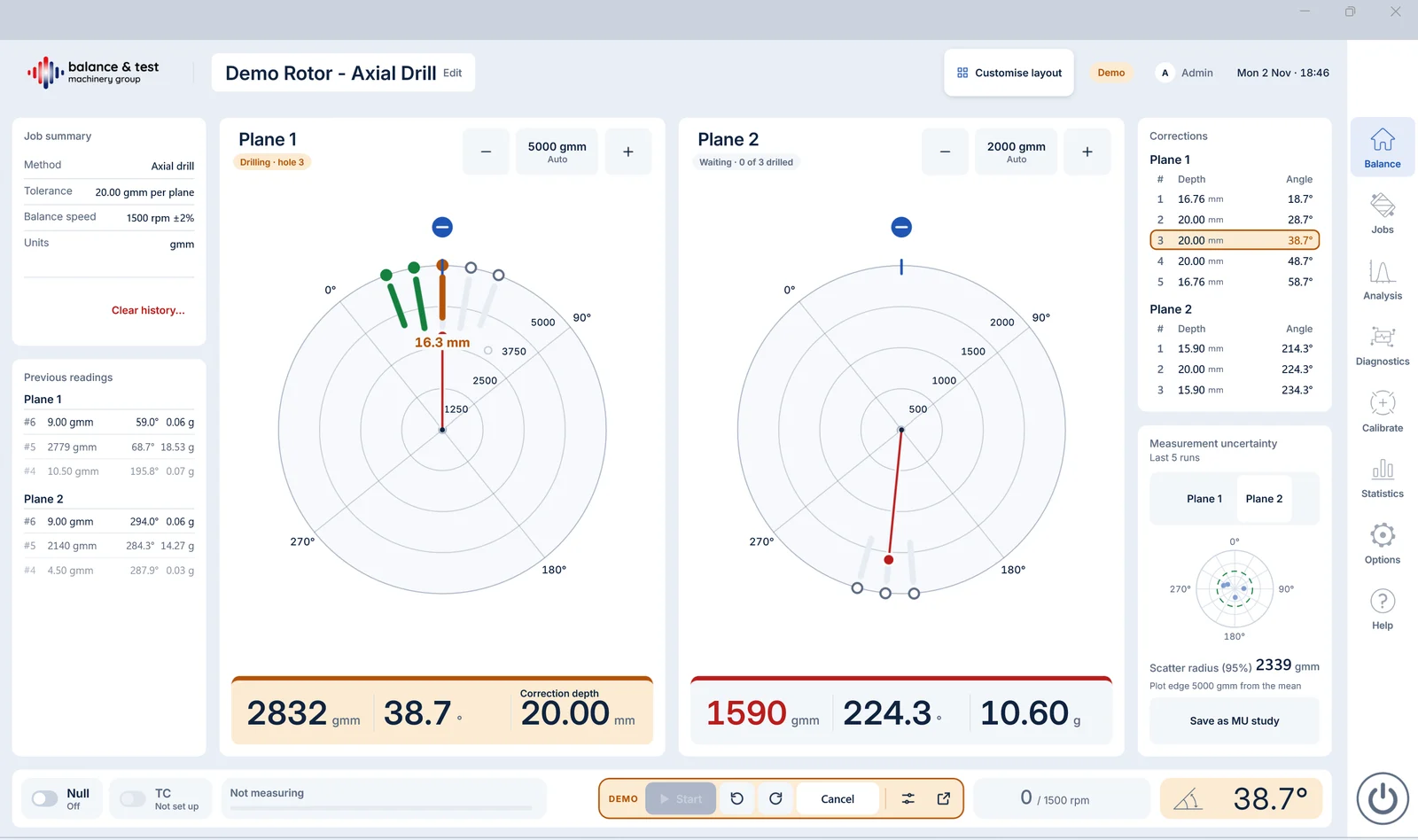
Each correction plane has its own polar display, with the unbalance amount, angle and correction in large, easy-to-read figures. During correction, every hole appears with its depth and angle and turns green once drilled.
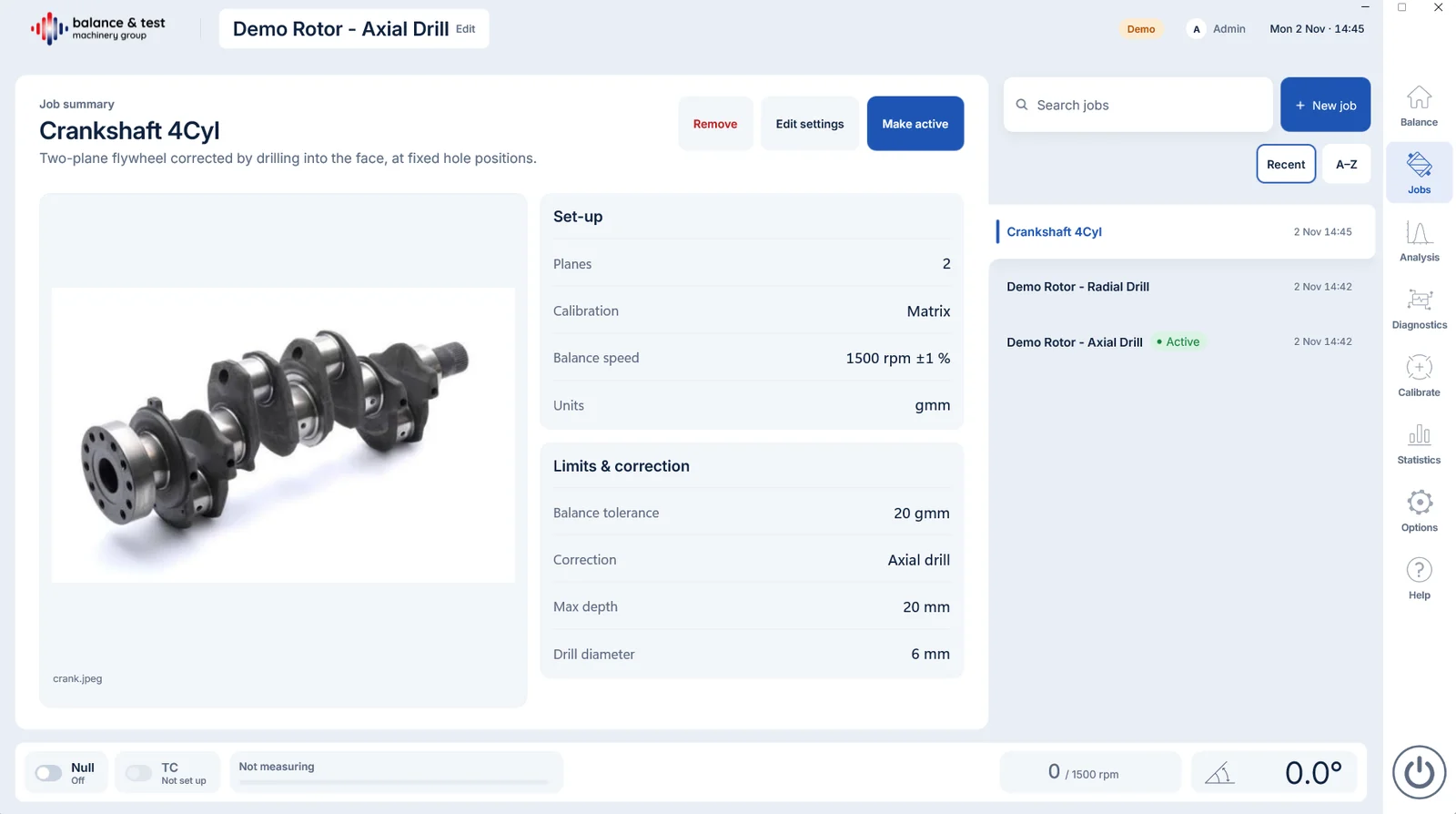
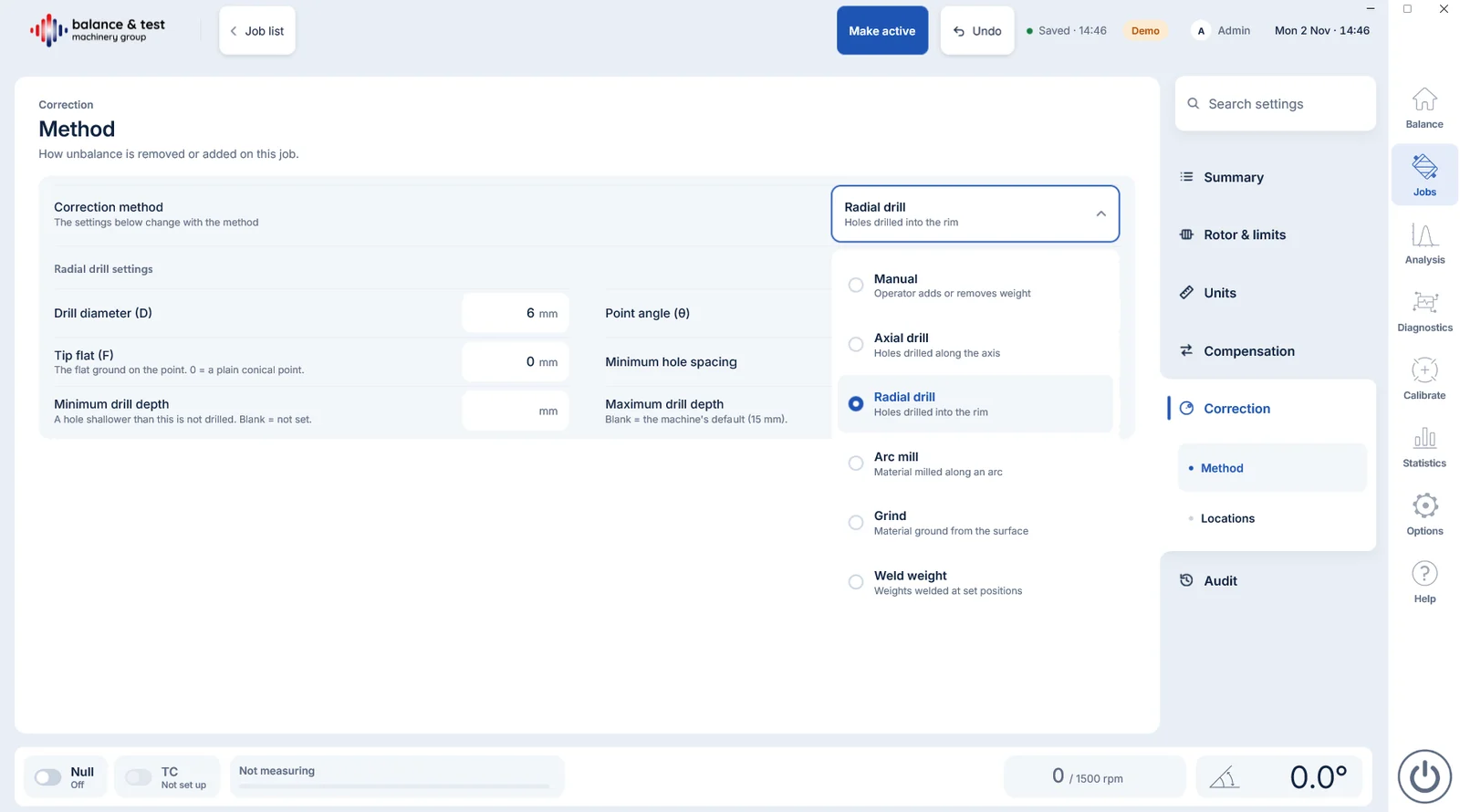
The real UltraX software balancing a demo rotor: measure, drill, re-measure.
Specifications
The numbers.
| Model | NR5 | NR20 | NR50 | NR100 | NR200 | NR500 |
|---|---|---|---|---|---|---|
| Maximum rotor weight - including tooling (kg) | 5 | 20 | 50 | 100 | 200 | 500 |
| Maximum rotor diameter (mm) | 280 | 500 | 500 | 700 | 1000 | 1500 |
| Maximum rotor thickness (mm) | 70 | 160 | 160 | 200 | 250 | 250 |
| Minimum achievable residual unbalance gmm/kg | 0.5 | 1 | 1 | 3 | 5 | 5 |
| URR (%) | 95 | 95 | 95 | 95 | 95 | 95 |
Scroll sideways for all 6 models
Non-standard specifications available.
Why Balance & Test
Service that delivers.
Industry leading on new machines.
Installation and operator training included as standard.
Plus local service teams.
Head office and service center in Bristol, UK; service and support in Ann Arbor, Michigan; engineering, manufacturing and support in Spain; sales and support in Germany.
Balancing machines and all our equipment are built to CE, UL or CSA standards, to suit your market.
We service and calibrate balancing machines from any manufacturer.
FAQ
All static balancers are built to CE, UL or CSA standards to suit your market, and every machine is proved to ISO 21940-21 before shipment.
Our static balancers are vertical, non-rotating machines that measure unbalance in a single plane. The part sits on a sensitive pivot suspension and the machine measures how it tilts, so nothing is spun. That suits disc-shaped, bladed or large rotors, and parts where spinning is impractical or windage would upset the reading.
Typical parts are aircraft wheels and tyres, aircraft braking systems, couplings, fans, grinding wheels and train wheels, for aerospace, rail, air movement and general industry, on rotors up to 500 kg / 1,100 lbs. Tooling is arbor-based and simple: it lifts on and off easily and can be configured for a wide range of wheels, brakes, couplings and fans.
Yes. Machines can be run manually, fitted with lift-lower handling systems, or integrated into an automatic cell to reduce manual intervention. Fast measurement cycles and simple load and unload handling suit both low-volume workshop use and higher-volume production cells. Correction is usually manual, with operators adding or removing material.
Ready to balance better?
We’ll configure the right static balancing machine for your technical needs and budget.