USA
Ann Arbor, Michigan
Service and support.
- Address
- 2723 South State Street, Suite 150, Ann Arbor, Michigan 48104, United States
- Phone
- +1 616 377 1077

Built to CE, UL or CSA standards
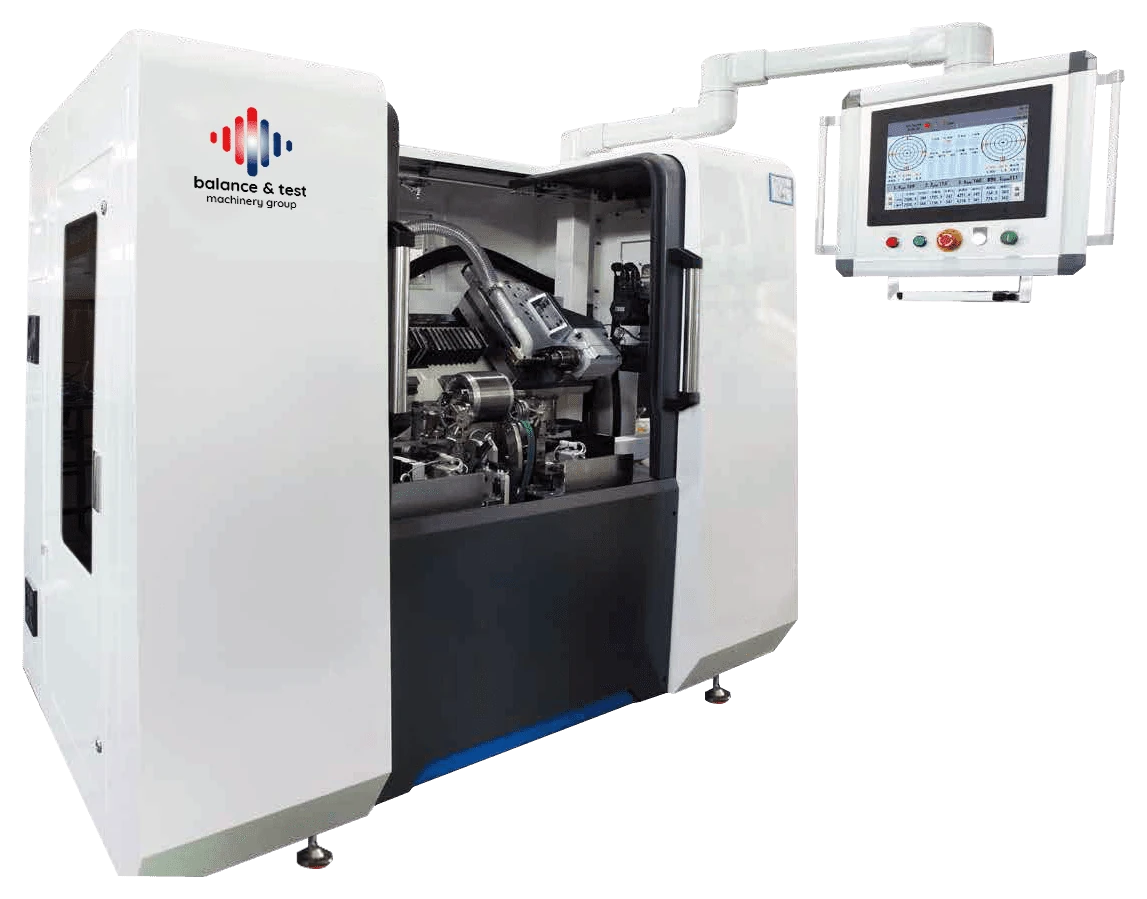
As a balancing machine manufacturer, our team brings more than 35 years of balancing experience to every balancing machine and balancing system we build: standard machines, modified and adjusted to each customer's exact requirements. Choose by part or by type, from horizontal machines for rotors up to 10,000 kg to vertical, static, universal and automatic machines.
By application
Find your part.
If it runs in its own bearings, it is usually balanced on its own journals on a horizontal machine. A disc with a central bore usually goes on a vertical machine, located through the bore it will be mounted on.
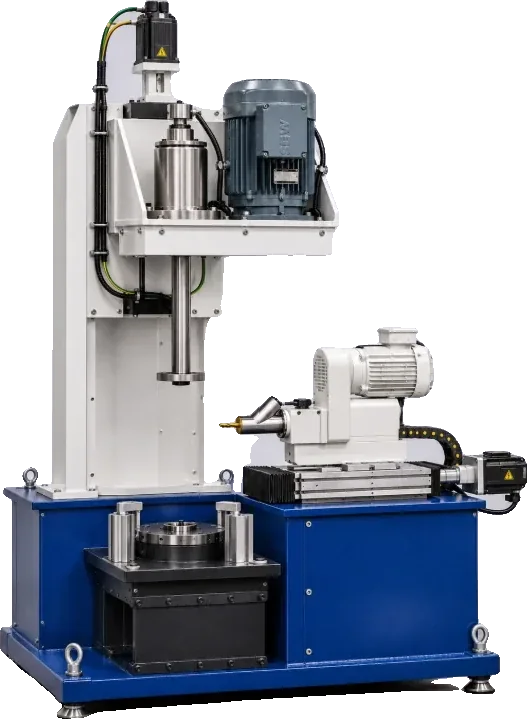
Third members, RDU/PTU, FDU and beam axles. Horizontal or vertical axis, for high-volume lines.
View axle balancers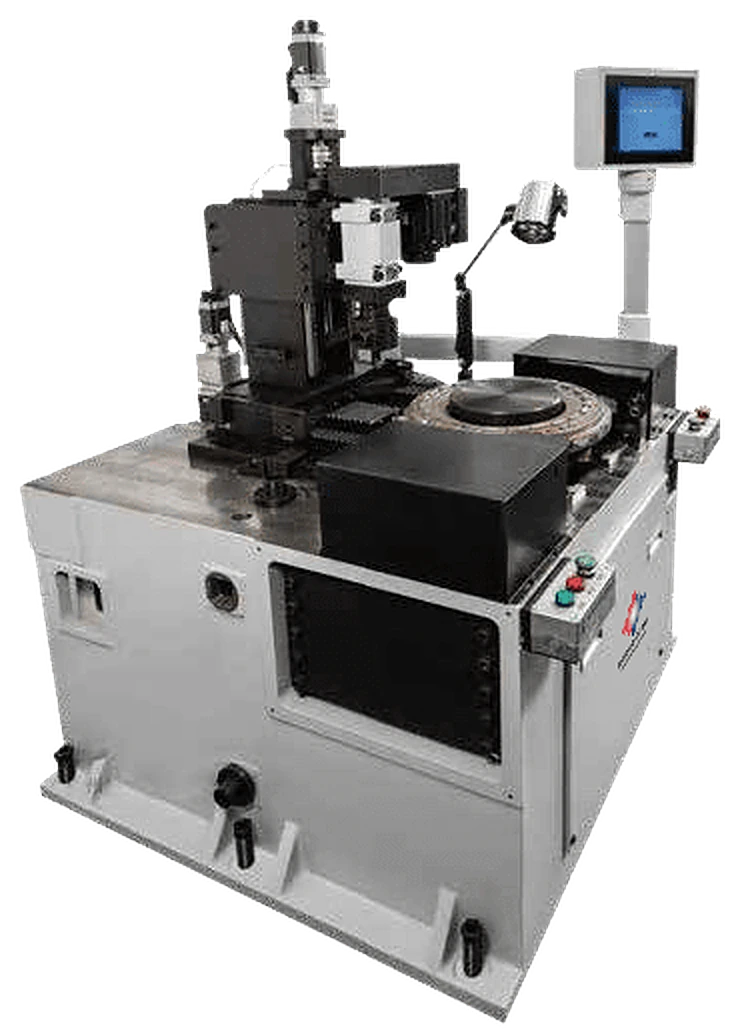
Brake discs, hubs and drums on vertical machines, single plane, usually with automatic milling correction.
View brake rotor balancersClutch covers, pressure plates and discs on vertical machines, measure-only to automatic drilling.
View clutch balancers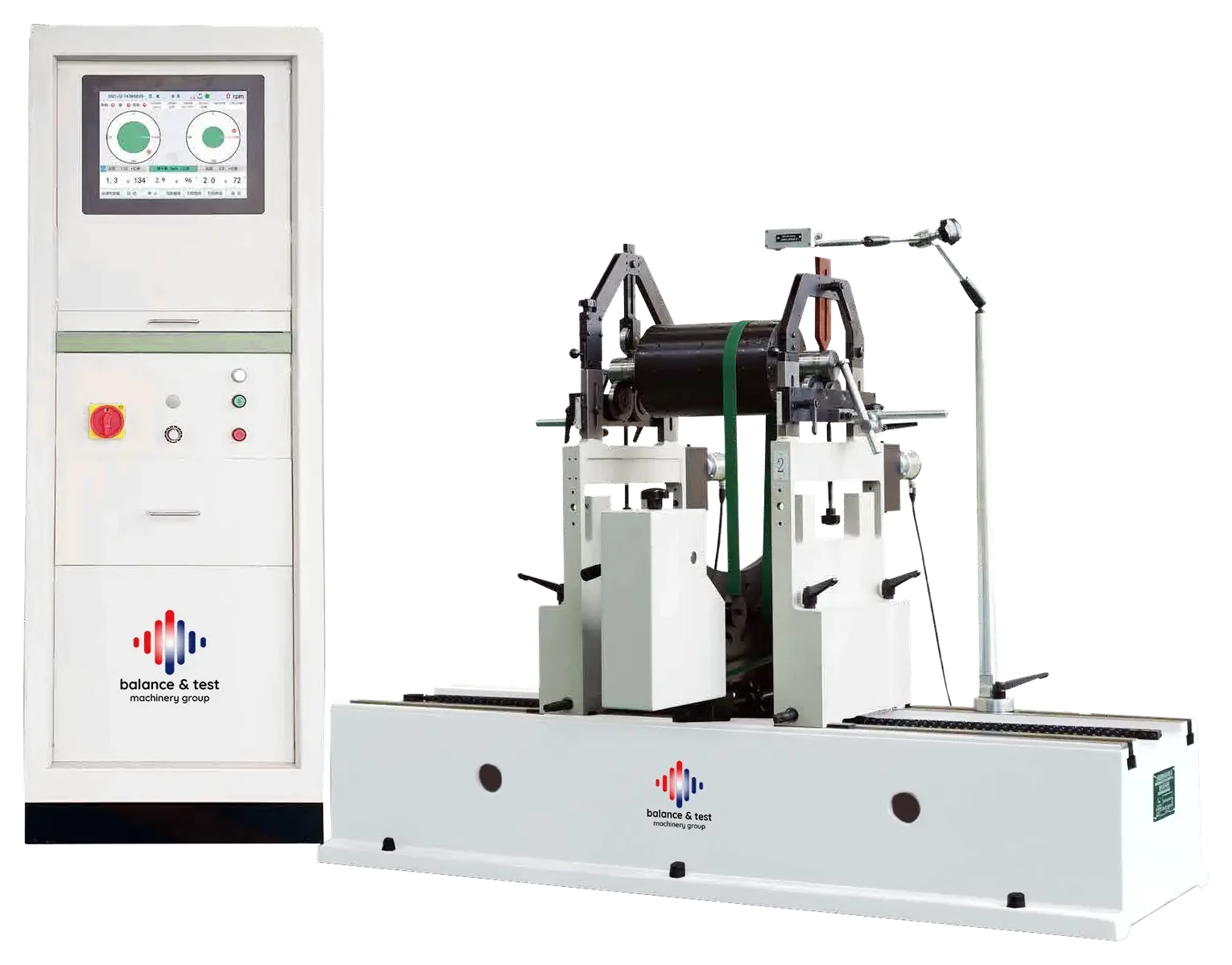
Inline and V cranks, on end-drive or belt-drive horizontal machines.
View crankshaft balancers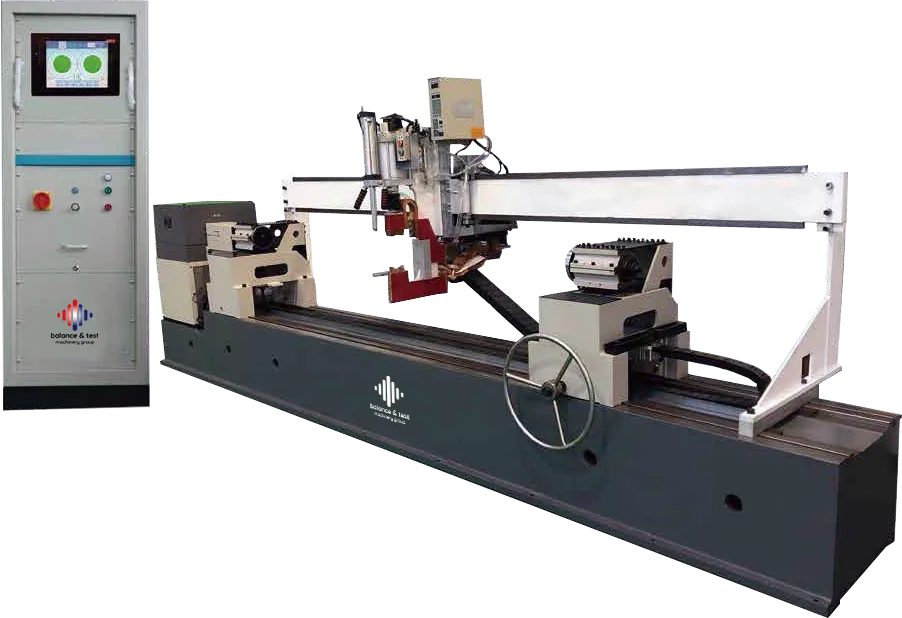
One- to four-piece shafts for light and heavy vehicles and industry, driven from the end fitting.
View driveshaft balancers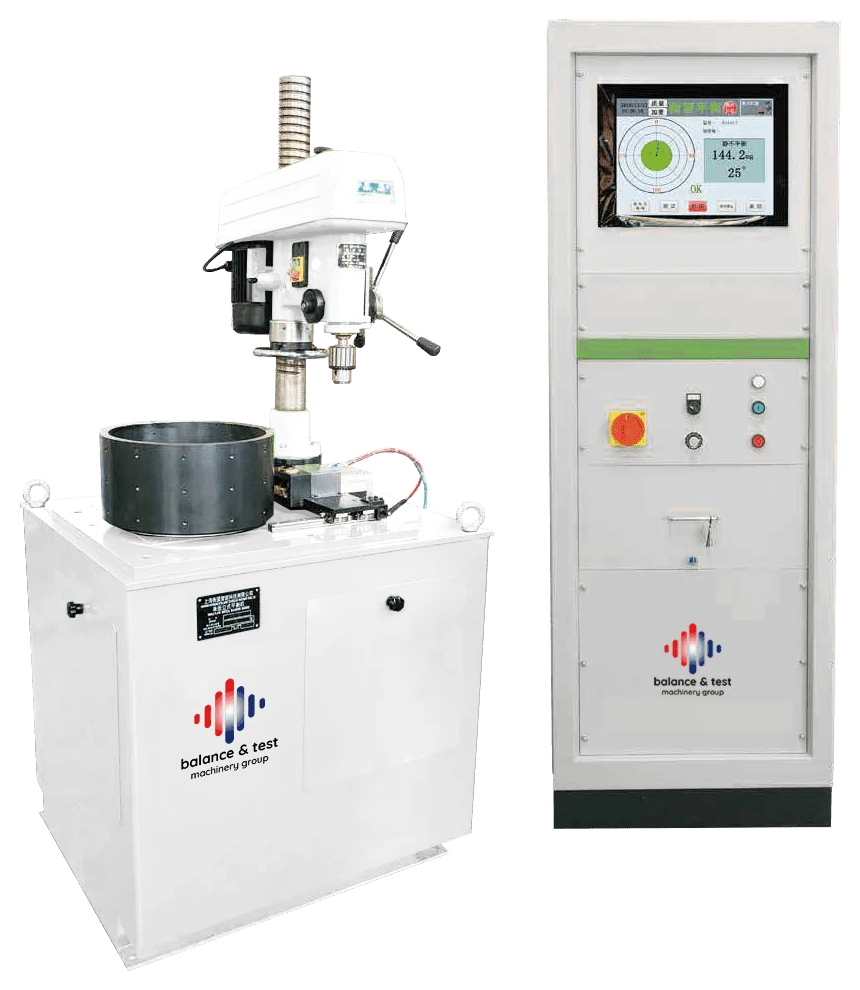
Single and dual mass flywheels on vertical machines, from passenger vehicles to large industrial.
View flywheel balancers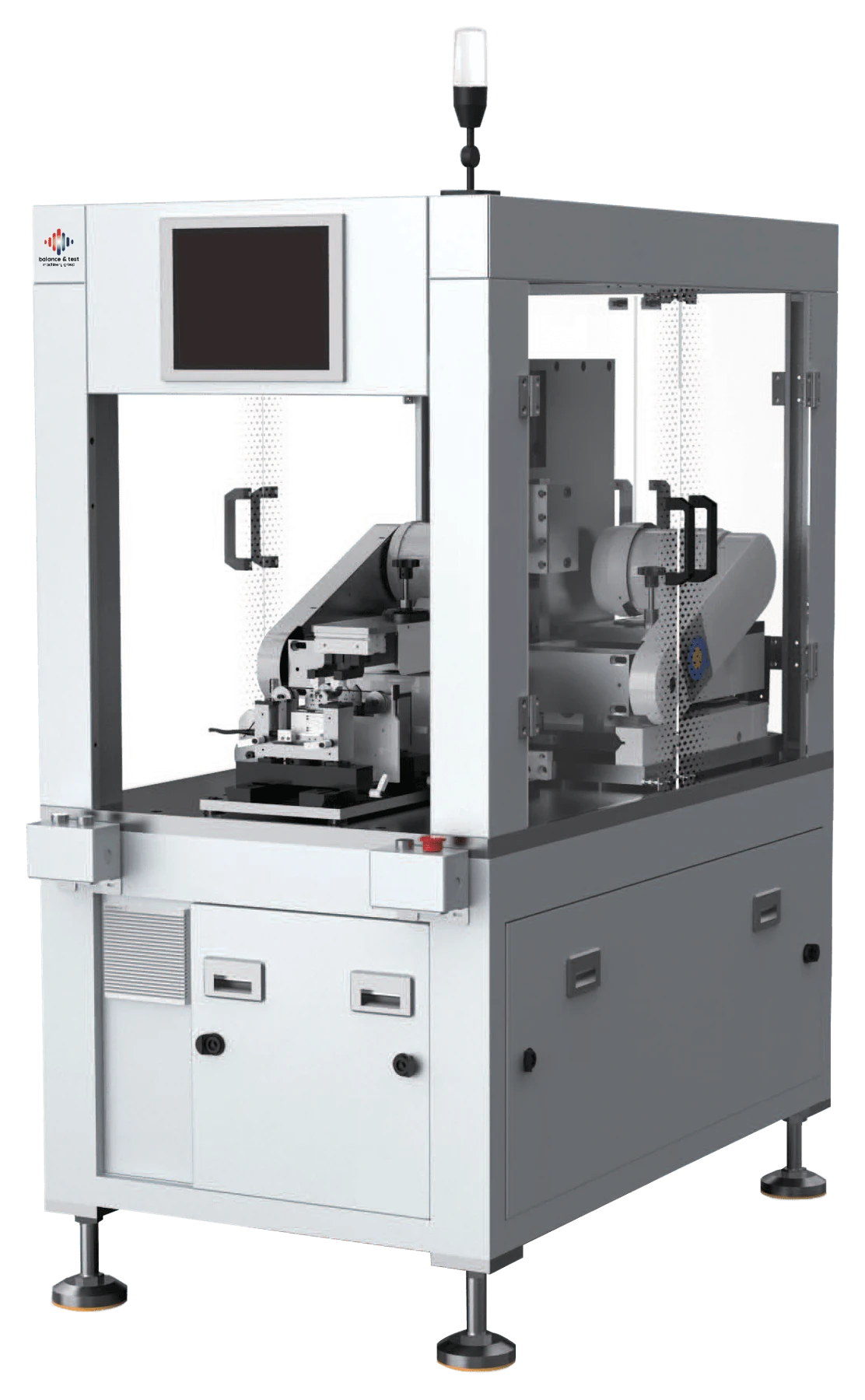
Motor rotors and wound armatures, on their own journals. Belt drive, manual or automatic.
View armature balancersRotors on horizontal belt-drive machines; complete motors on table-type systems.
View electric motor balancers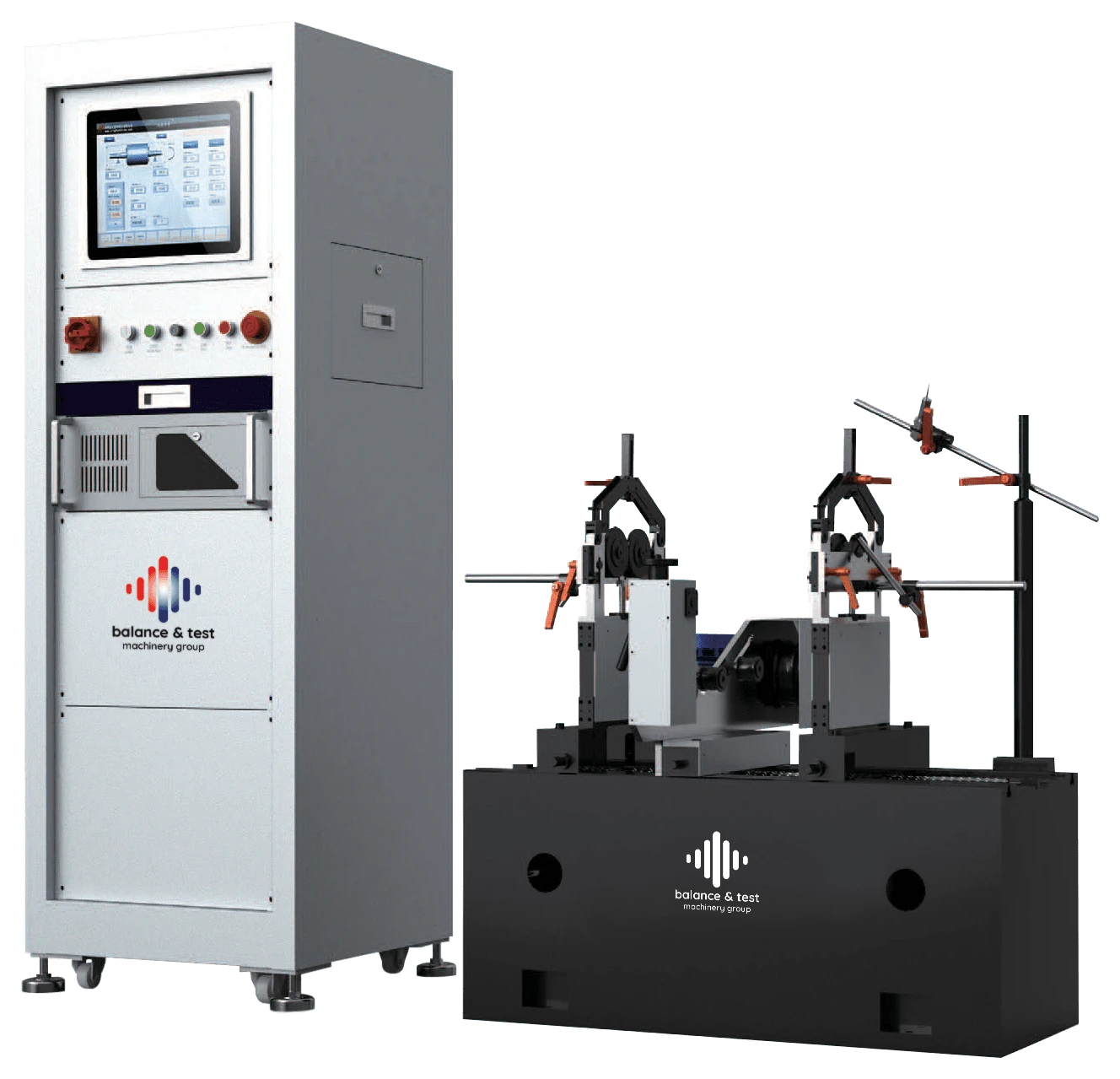
Machine tool and motor spindles, on horizontal belt-drive machines.
View spindle balancers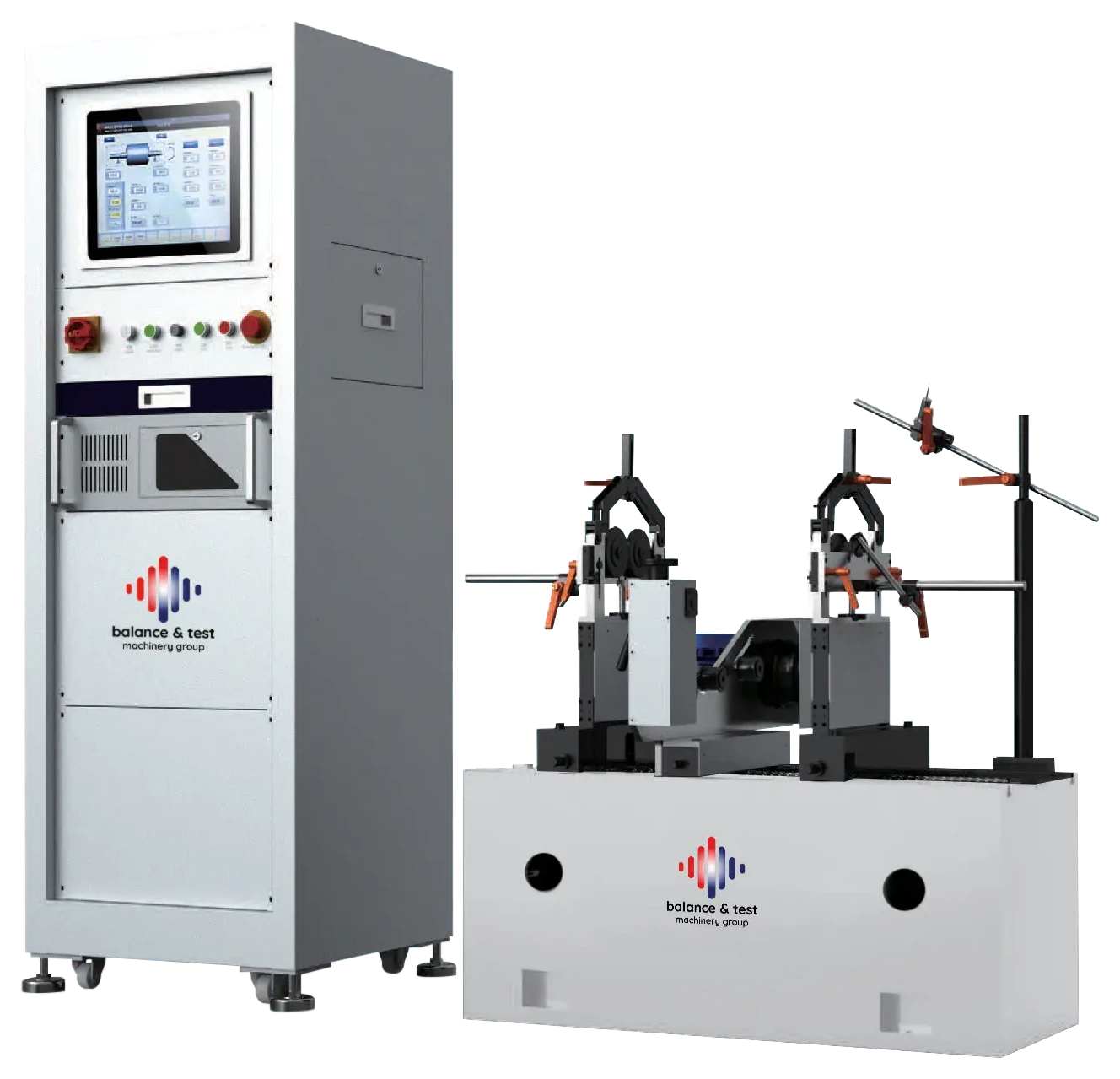
Grinding wheels on non-rotating or vertical machines, single-plane correction.
View grinding wheel balancers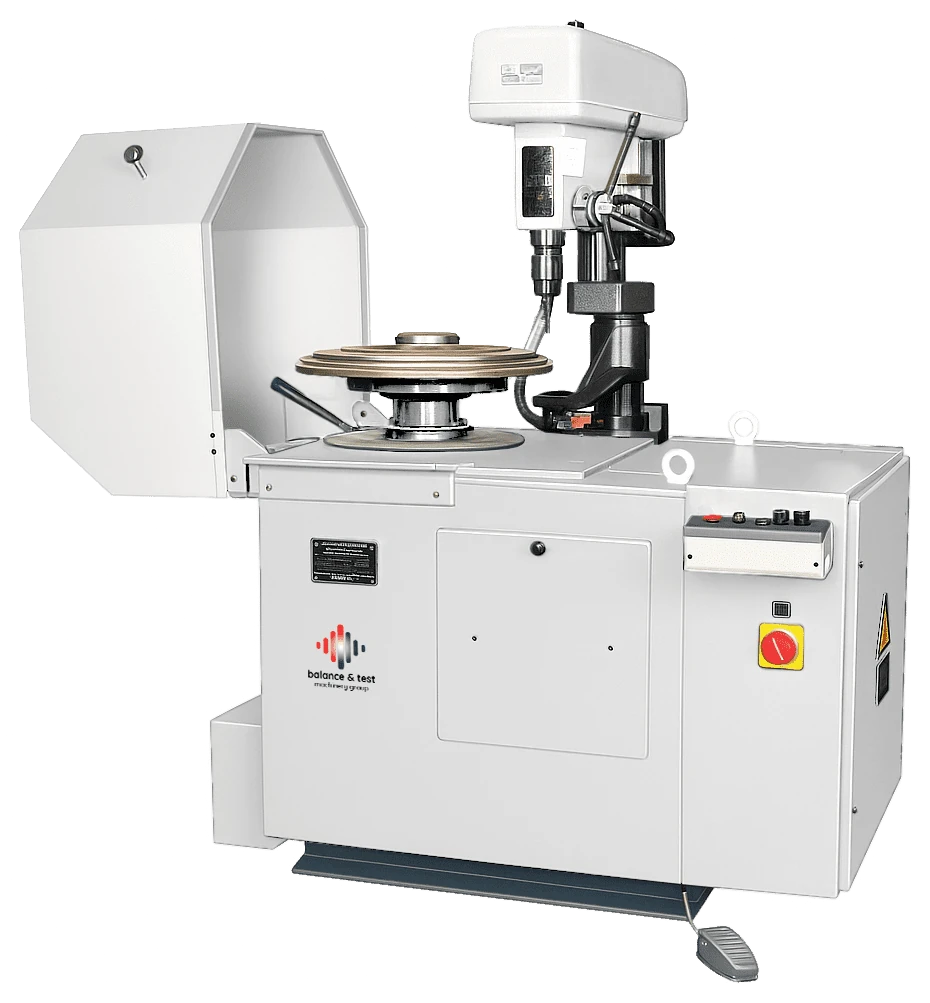
V-groove, poly-V, timing, flat and conveyor pulleys and sheaves, on vertical machines.
View pulley balancers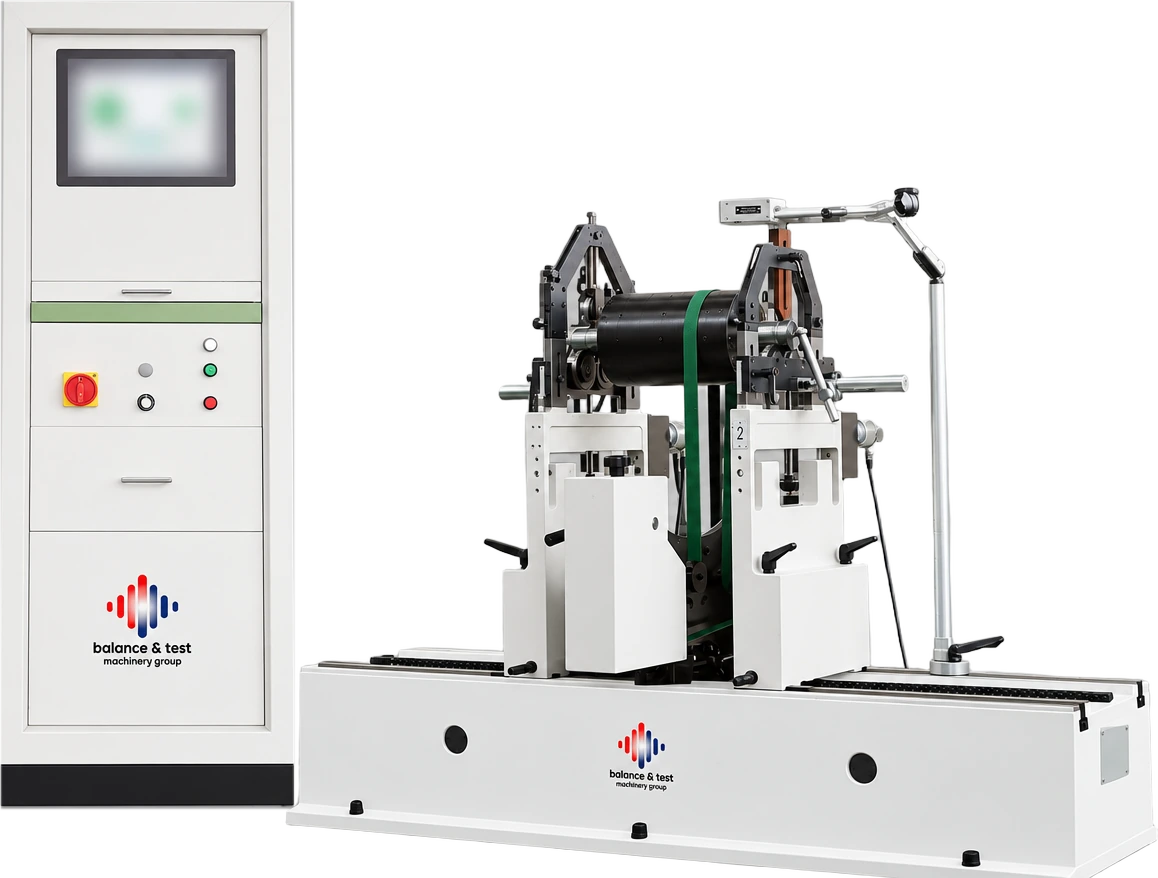
Centrifugal, axial and mixed-flow blowers, on their own shaft (horizontal), a bore (vertical) or non-rotating.
View blower balancers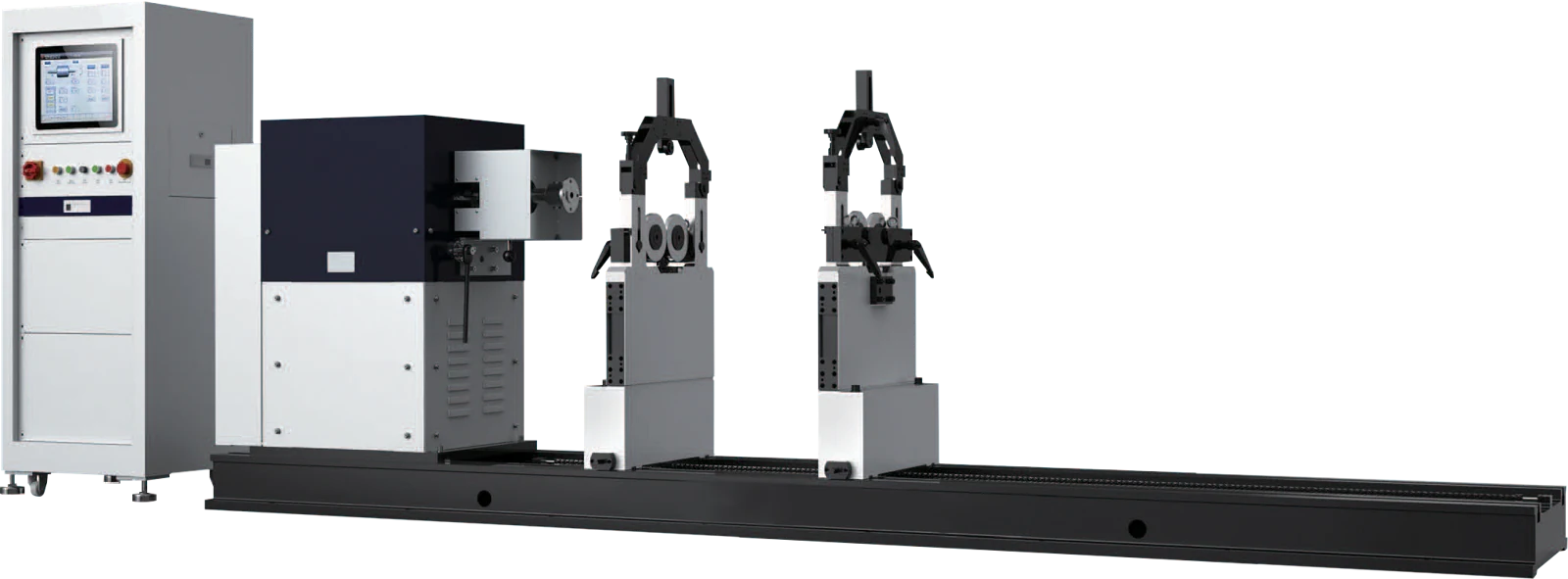
Axial, centrifugal and mixed-flow fans, on horizontal machines (shaft or mandrel) or vertical machines (located through the bore).
View fan balancers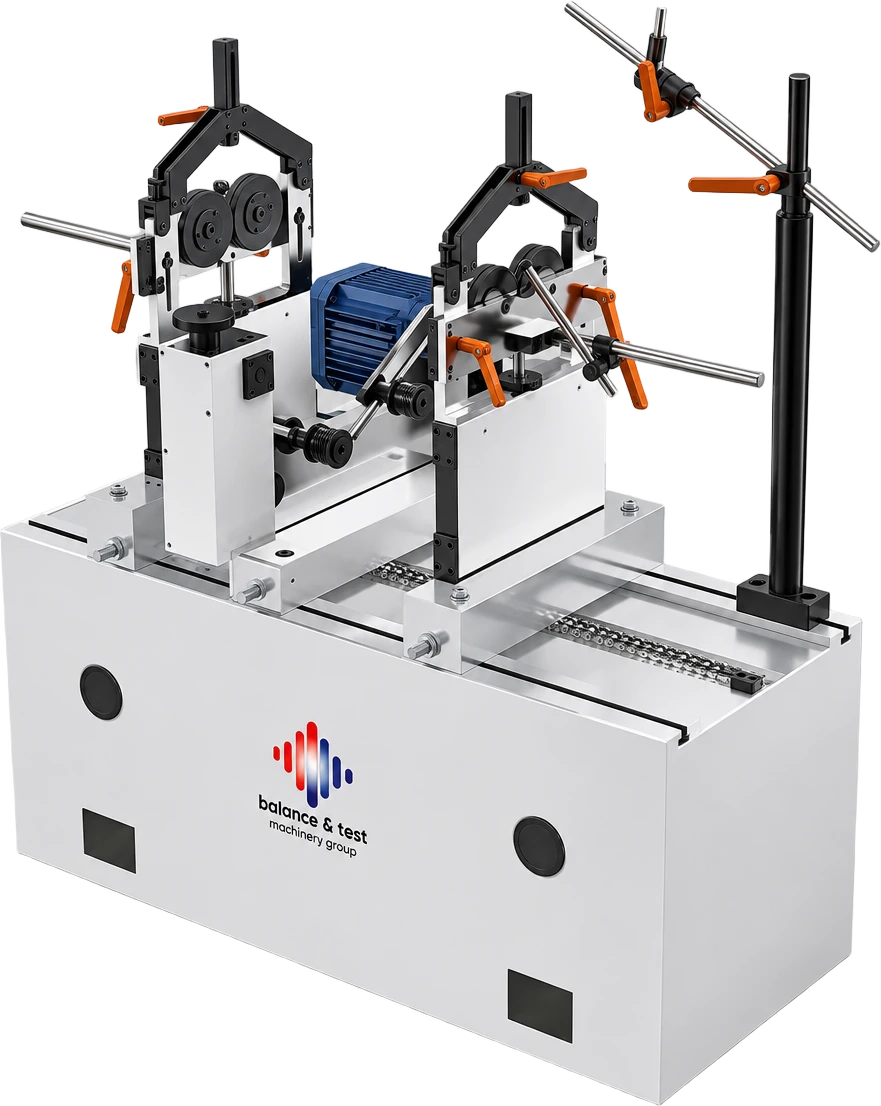
Pump, fan and compressor impellers, including marine pump impellers. Vertical for single-plane, horizontal on a mandrel for two-plane and multistage.
View impeller balancers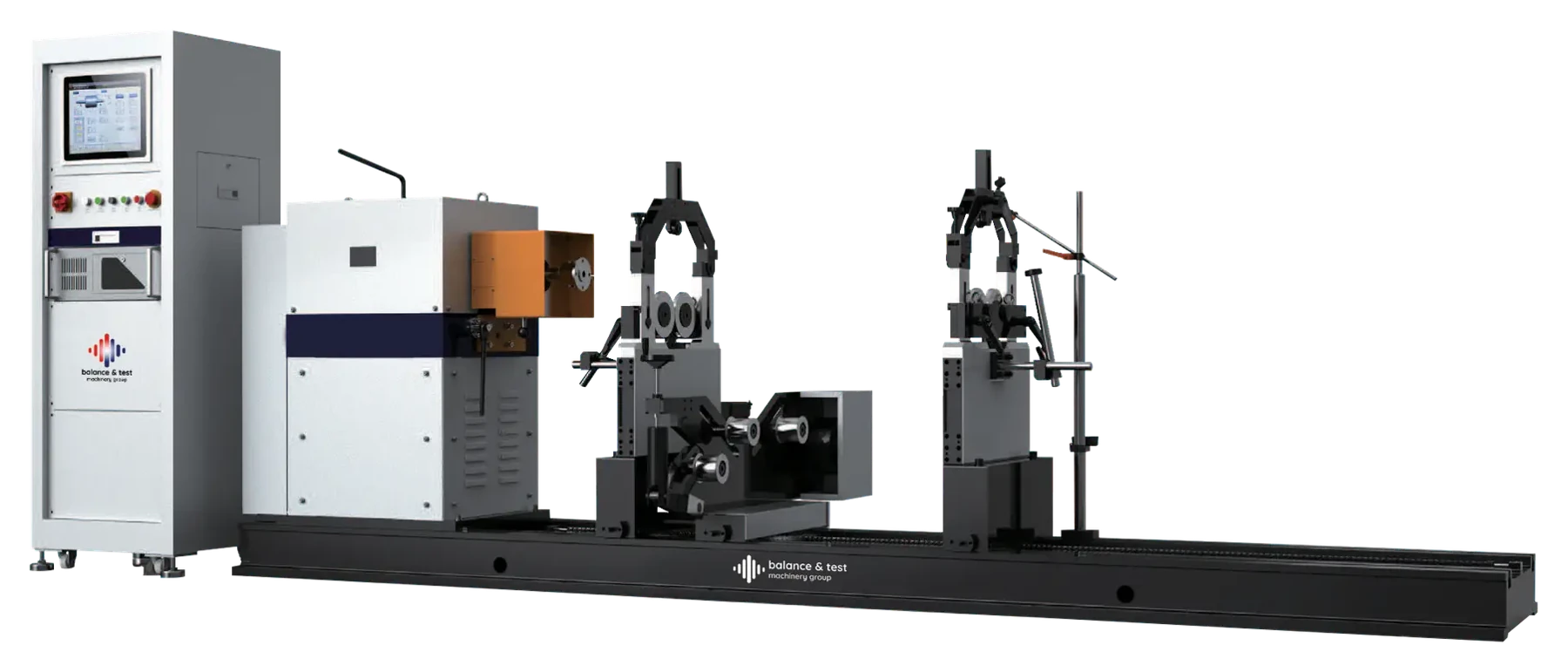
Agricultural and off-highway flail, mulcher and shredder rotors, on horizontal belt- or end-drive machines.
View flail balancers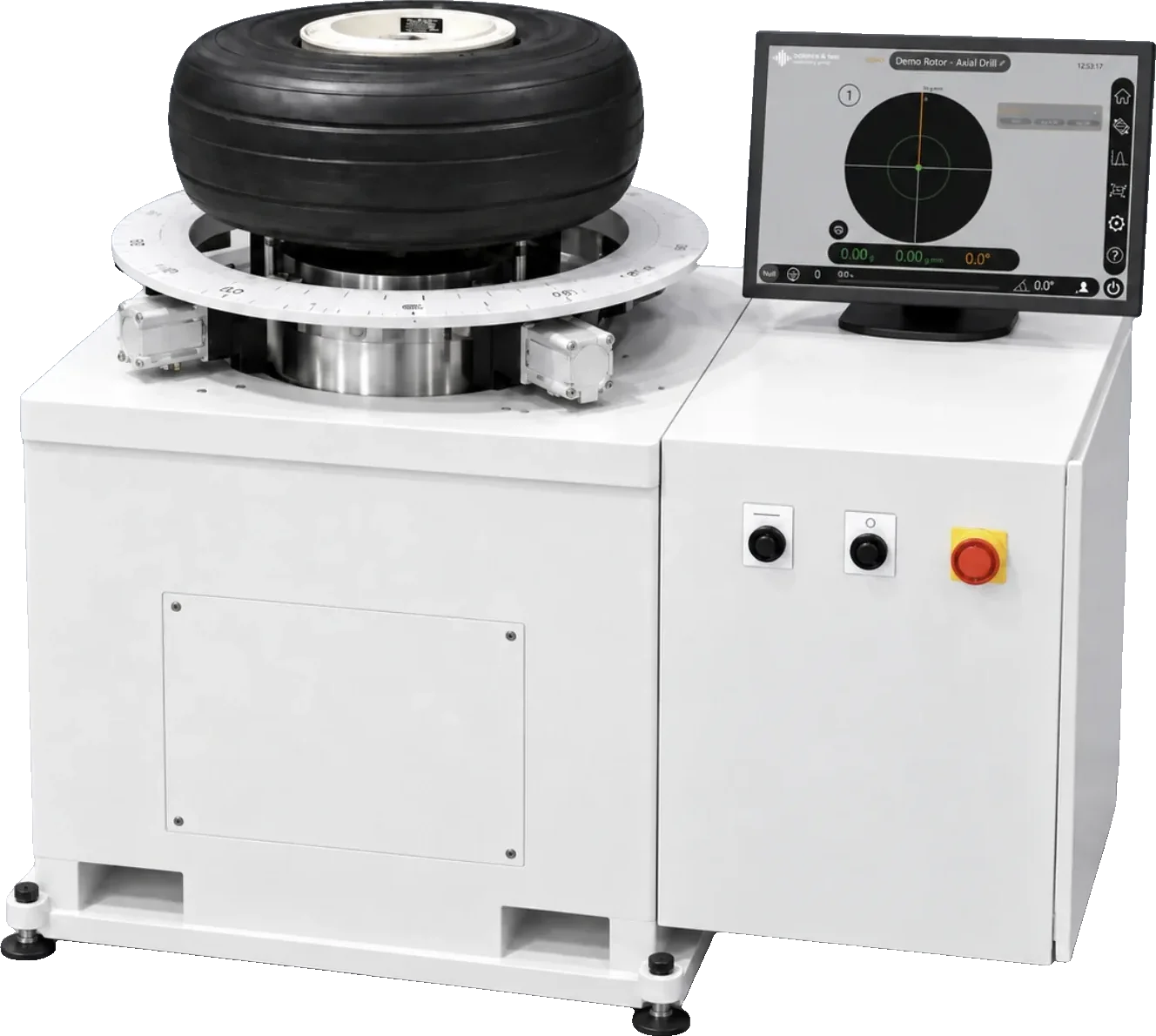
Commercial, military and general aviation wheels, tires and brakes, on non-rotating (static) machines.
View aircraft wheel balancers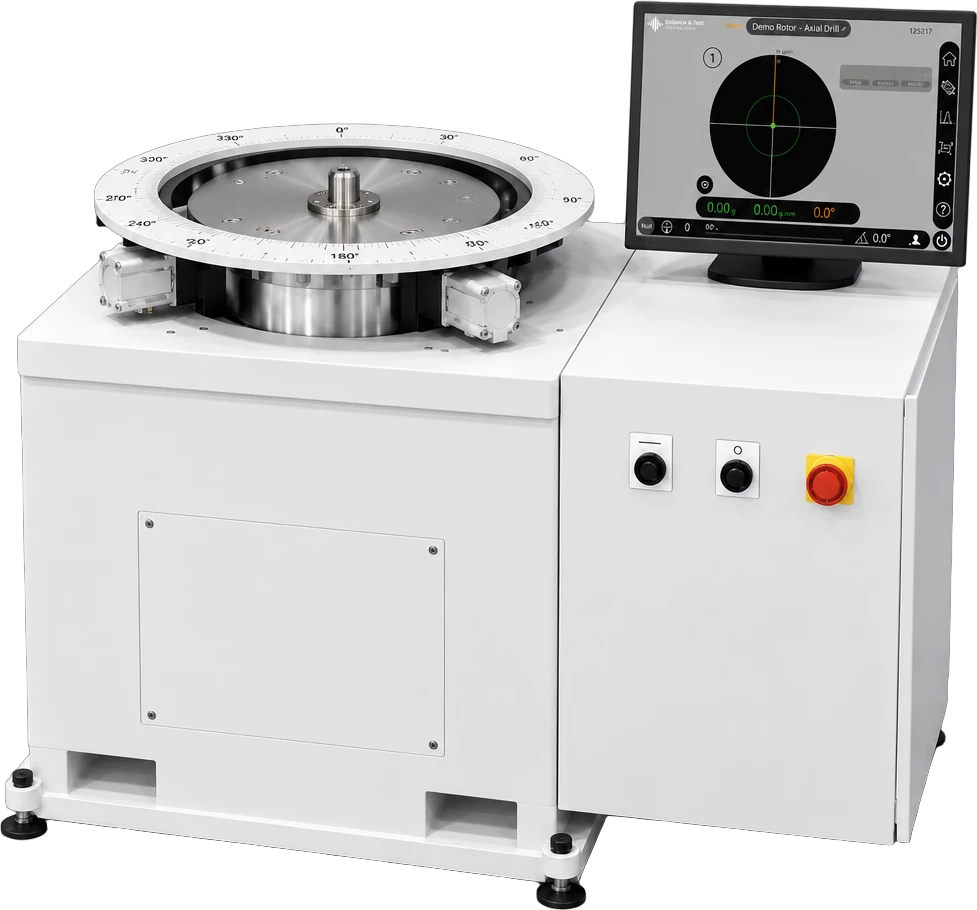
Aircraft and UAV propellers, mounted on a mandrel on horizontal machines.
View propeller balancers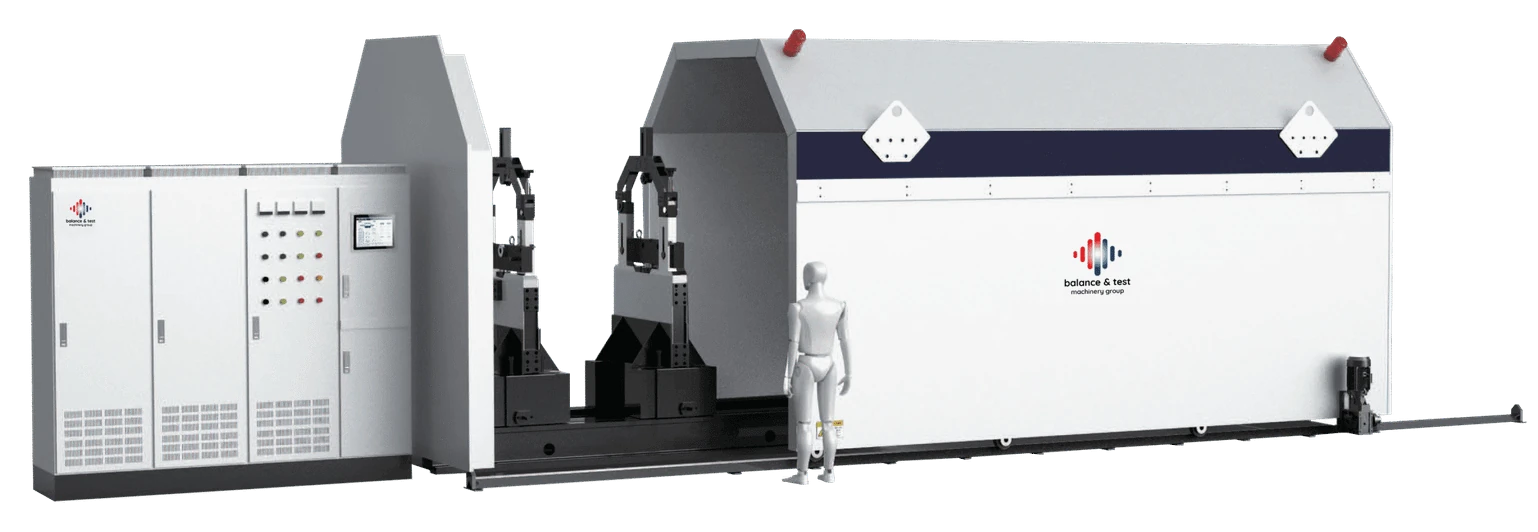
Turbine rotors on horizontal machines; turbine wheels and discs on vertical machines.
View turbine balancersNot on the list? Send us the drawing and we will tell you which machine suits it.
By machine type
Seven ways to balance.
Horizontal or vertical, one plane or two, manual or automatic.
Orientation
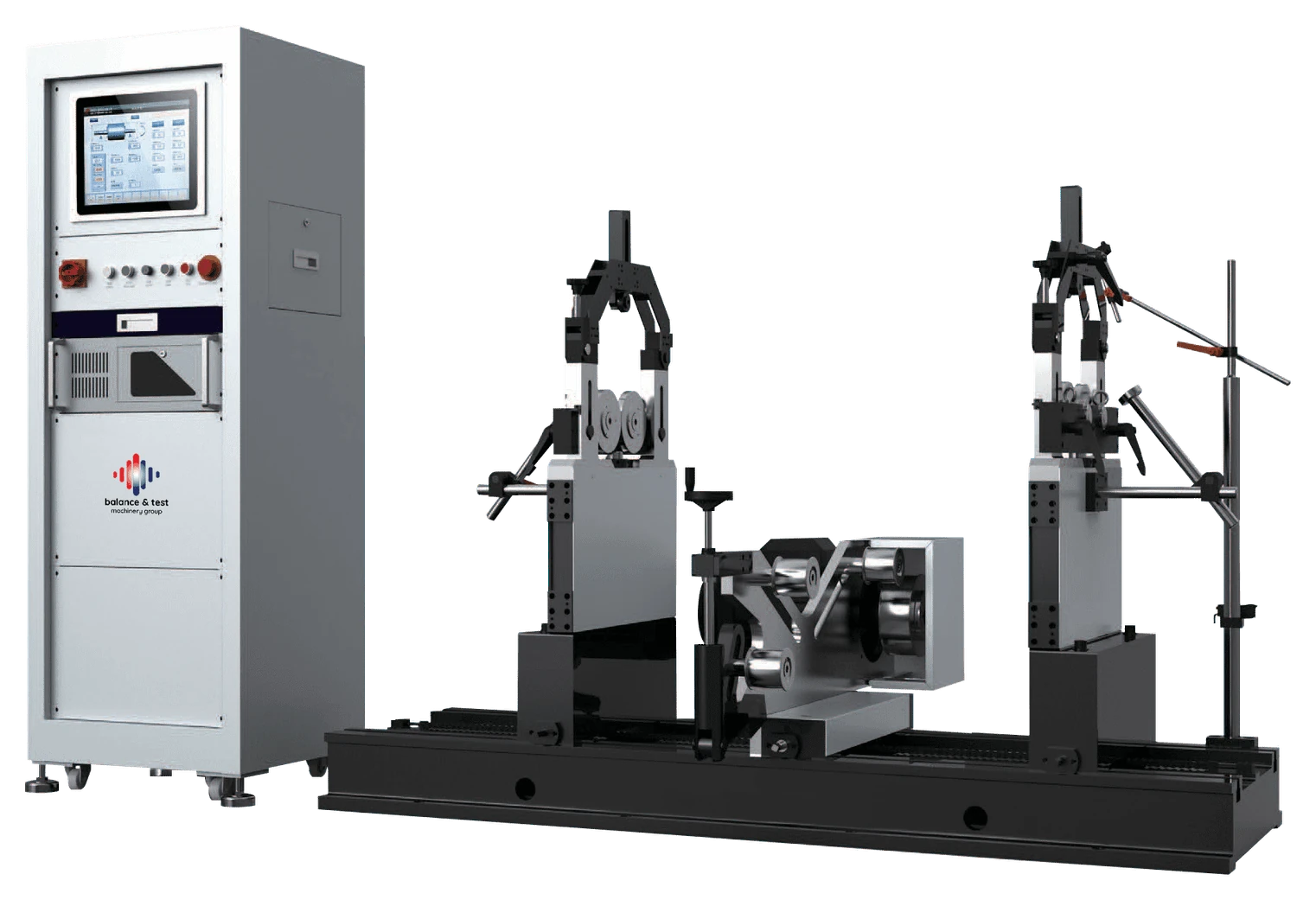
Belt and end drive, manual and automatic, for rotors up to 10,000 kg / 22,000 lbs.
View horizontal balancersOrientation
Disc-type rotors such as pulleys, fans and brake rotors, up to 300 kg as standard.
View vertical balancersPlanes
Single-plane balancing, non-rotating or on a vertical machine, for aircraft wheels, grinding wheels and more, up to 500 kg.
View static balancers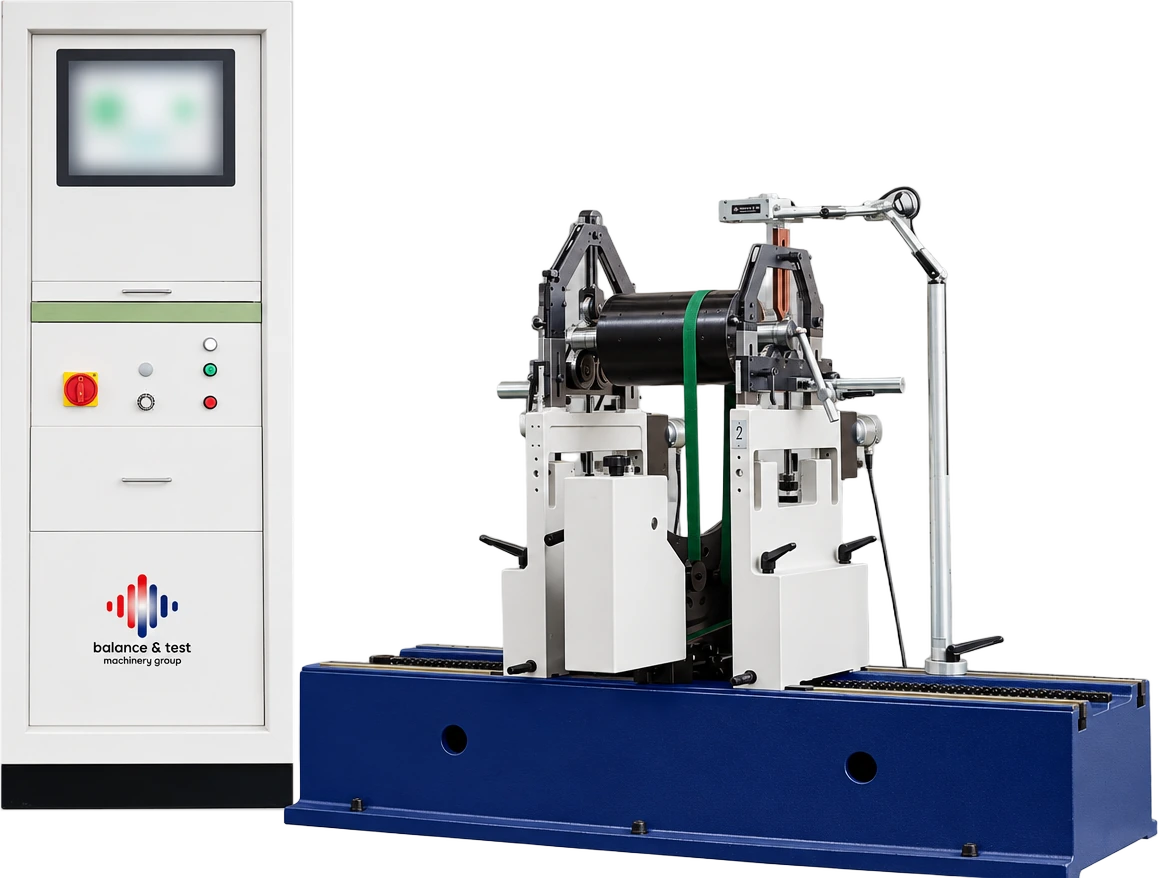
Planes
Two-plane balancing for rotors where couple unbalance must be corrected, on horizontal or vertical machines.
View dynamic balancersFlexibility
A wide range of rotors on one horizontal platform. Belt, end and dual drive, modular tooling.
View universal balancers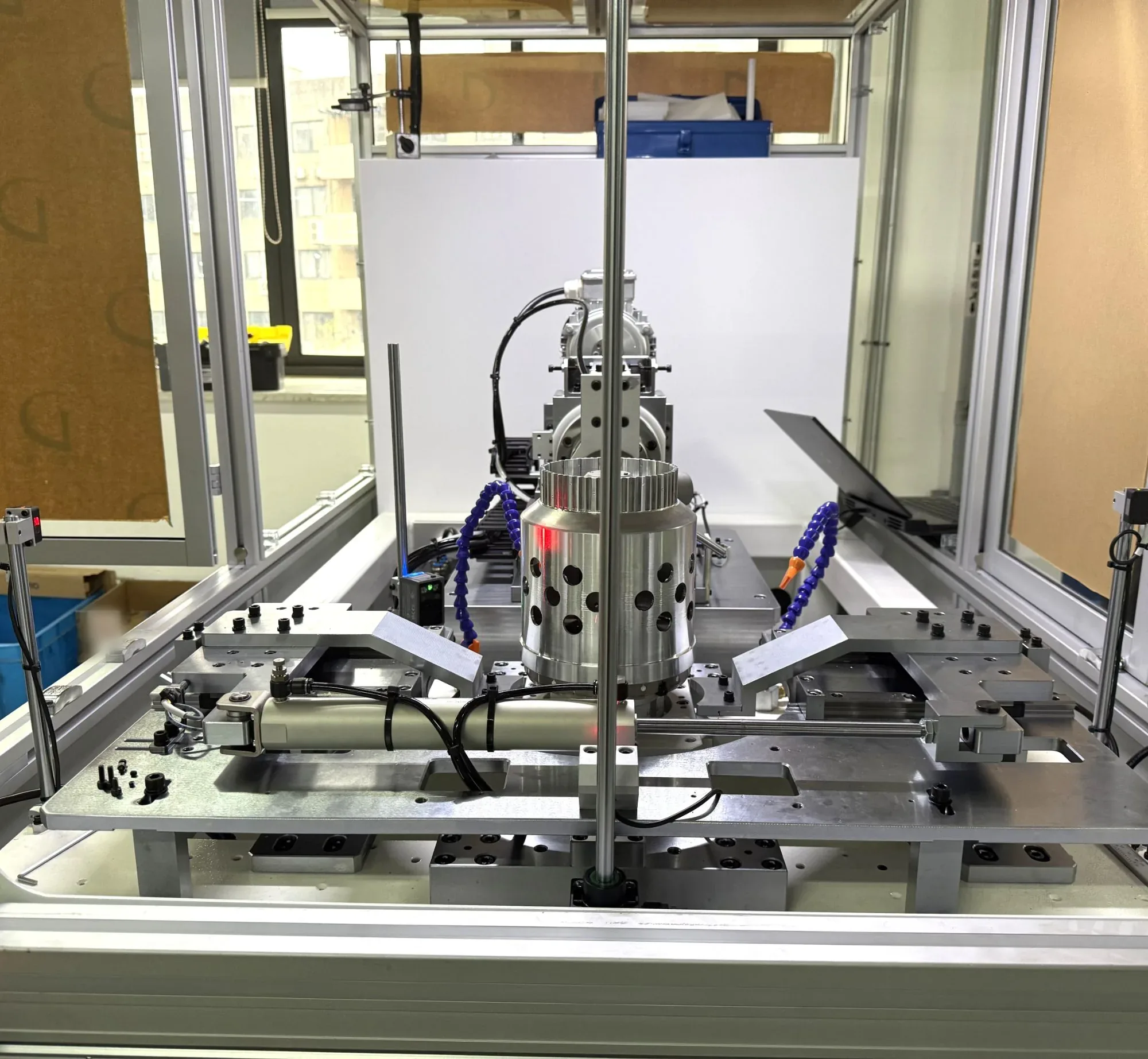
Production
High-volume production with integrated correction and robotic handling.
View automatic balancersSpeed
Hard-bearing machines that measure accurately at low balancing speed, for safety with large or irregular rotors.
View low speed balancersCompare the range
Sizes, speeds and accuracy.
| Machine type | Models | Rotor weight | Max diameter | Balancing speed | Min. residual unbalance |
|---|---|---|---|---|---|
| Horizontal, belt drive (small rotors) | H1.6B to H160B | 1.6 to 160 kg (3.5 to 350 lb) | Up to 1,000 mm (39 in) | 300 to 4,500 rpm | 0.1 to 0.5 g·mm/kg |
| Horizontal, belt drive (medium rotors) | H300B to H7500B | 300 to 7,500 kg (660 to 16,500 lb) | Up to 2,100 mm (83 in) | 300 to 3,800 rpm | 0.5 g·mm/kg |
| Horizontal, end drive | H160E to H10000E | 160 to 10,000 kg (350 to 22,000 lb) | Up to 3,600 mm (142 in) | 300 to 2,000 rpm | 0.5 to 1 g·mm/kg |
| Vertical | V1.5 to V300 | 1.5 to 300 kg (3.3 to 660 lb) incl. tooling | Up to 1,500 mm (59 in) | Up to 3,000 rpm | 0.5 to 5 g·mm/kg |
| Non-rotating static | NR5 to NR500 | 5 to 500 kg (11 to 1,100 lb) incl. tooling | Up to 1,500 mm (59 in) | Non-rotating | 0.5 to 5 g·mm/kg |
Minimum residual unbalance per kg of rotor mass, from our spec sheets, tested to ISO 21940-21; better on request. Unbalance reduction ratio 95% on every model. Larger machines and non-standard specifications are built to order. Use the Machine Finder to check your rotor.
Not sure which machine?
Rotor in, machine out.
Why Balance & Test
Service that delivers.
Industry leading on new machines.
Installation and operator training included as standard.
Plus local service teams.
Head office and service center in Bristol, UK; service and support in Ann Arbor, Michigan; engineering, manufacturing and support in Spain; sales and support in Germany.
Balancing machines and all our equipment are built to CE, UL or CSA standards, to suit your market.
We service and calibrate balancing machines from any manufacturer.
FAQ
It depends on the type of rotor, how it is held, the correction method, and the volume and variety of parts you need to balance. A rotor with its own journals, such as a grinding spindle or motor armature, typically goes on a horizontal balancing machine, where the journals sit directly on the rollers. A disc-type rotor with a bore, such as a grinding wheel or pump impeller, typically goes on a vertical balancing machine. Horizontal machines are also called universal machines because you can balance almost any component on them with the right tooling; vertical machines are often better suited to higher volumes and automated correction.
At the top level, balancing machines are horizontal or vertical. Vertical machines are rotating or non-rotating: a rotating machine spins the part to sense vibration in the suspension, and a non-rotating machine works like a sensitive set of scales, letting the rotor tilt. Horizontal machines include universal machines, rotor-specific machines such as prop shaft balancing machines, and horizontal spindle machines.
It comes down to the natural frequency of the suspension relative to the balancing speed. On a soft-bearing machine the natural frequency is well below the balancing speed and the supports move; on a hard-bearing machine it is well above, so the supports barely move and the machine measures force. Most of our balancing machines are hard-bearing, which means they are permanently calibrated and need no trial runs for a new rotor. Propshaft balancing machines are typically soft-bearing.
A universal balancing machine is designed to handle the widest possible range of rotors on a single platform, from long shaft-type rotors to compact disc-type components, in one plane or two. It is the go-to choice for workshops and manufacturers that need to cover a broad mix of applications.
All our balancing machines are built to CE, UL or CSA standards to suit your market, and every machine is proved to ISO 21940-21 before shipment.
Yes. Our standard machines can be modified and adjusted to meet a customer's exact requirements. Send us the drawing and we will recommend the machine.
Our offices
Five locations, two continents.
USA
Service and support.
Head office
Head office.
Service center
Service and support.
Spain
Engineering, manufacturing and support.
Germany · GEC Solutions
Sales and support.
Ready to balance better?
Send us the drawing, the weight, the running speed and the tolerance you work to, and we will recommend the machine.