
Built to CE, UL or CSA standards
High accuracy grinding wheel balancers for manual operation or integration into automatic production lines, covering surface, cylindrical, tool and cutter and abrasive cutoff wheels. Static or vertical rotating machines audit and grade wheels, with correction added where required. Robustly designed, proved to ISO 21940-21 before shipment and backed by up to a 3-year warranty.
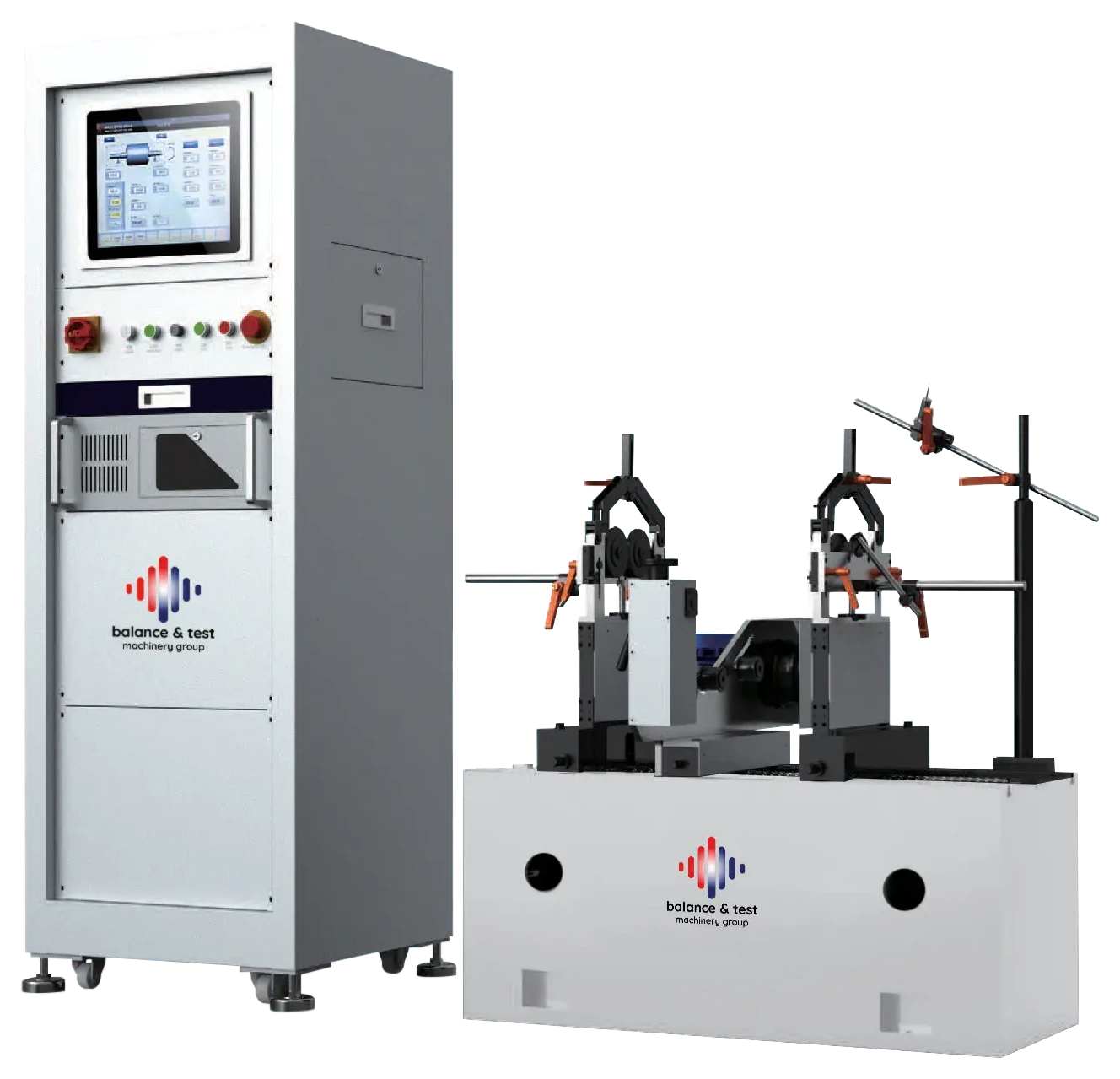
Overview
Built for the wheel.
Grinding wheel balancers are static (non-rotating) machines or vertical rotating machines, depending on the wheel and the production requirement. Most wheels are balanced in a single plane. Many machines are used for audit, measuring and grading wheels, but correction can be added where required.
For high-speed or precision grinding, correction can be made by drilling the hub or flange, or by filling with balancing compound.
Grinding wheel balancers are often integrated into production lines, where loading and unloading is automated through robotic systems or conveyor-based handling. This enables high throughput while maintaining process control and consistency.
Tooling depends on production volume. For low-volume applications, simple solid mandrels are typically sufficient. For higher-volume production environments, automatic chucks are used to deliver repeatability, speed, and reduced operator intervention.
Applications
Where it works.
Key features
Accurate. Robust. Simple.
Every machine is proved to ISO 21940-21 before it ships.
Engineered for continuous industrial use
Easy setup, fast changeover.
Industry leading on new machines.
Measuring system
Measure, correct, certify.
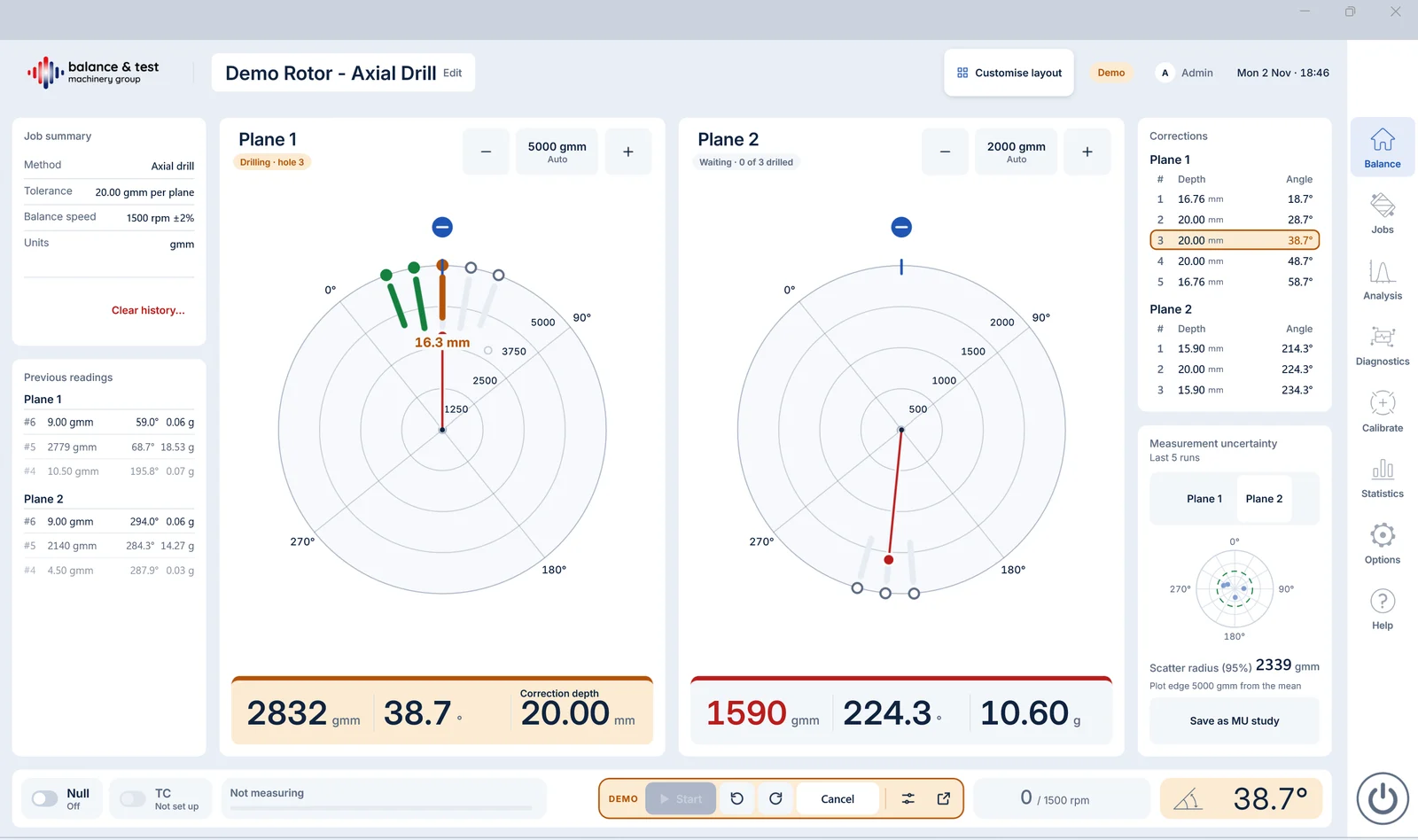
Our fifth-generation measuring system: dedicated electronics that measure unbalance with extreme accuracy, connected over Ethernet to the UltraX balancing software.
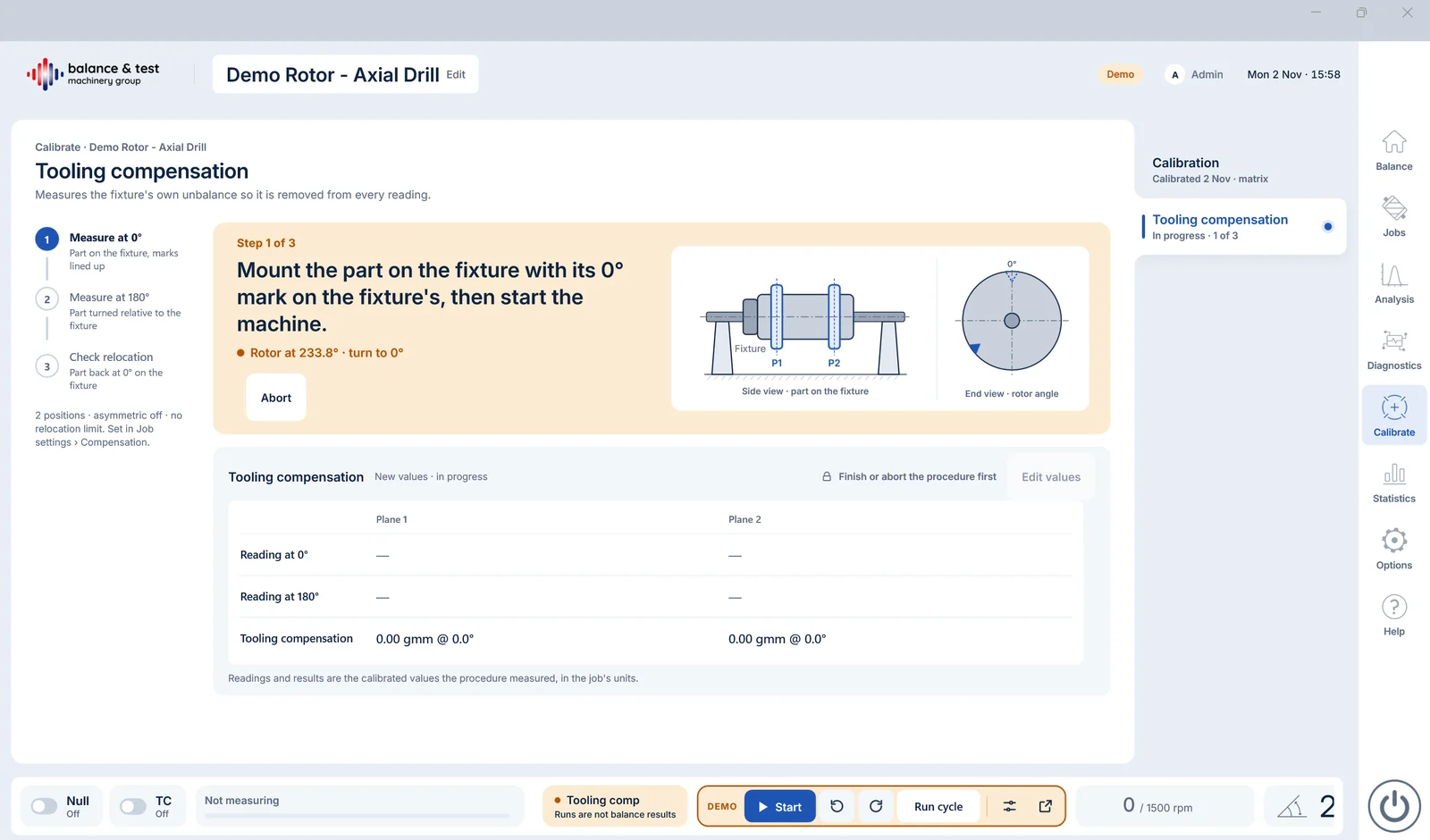
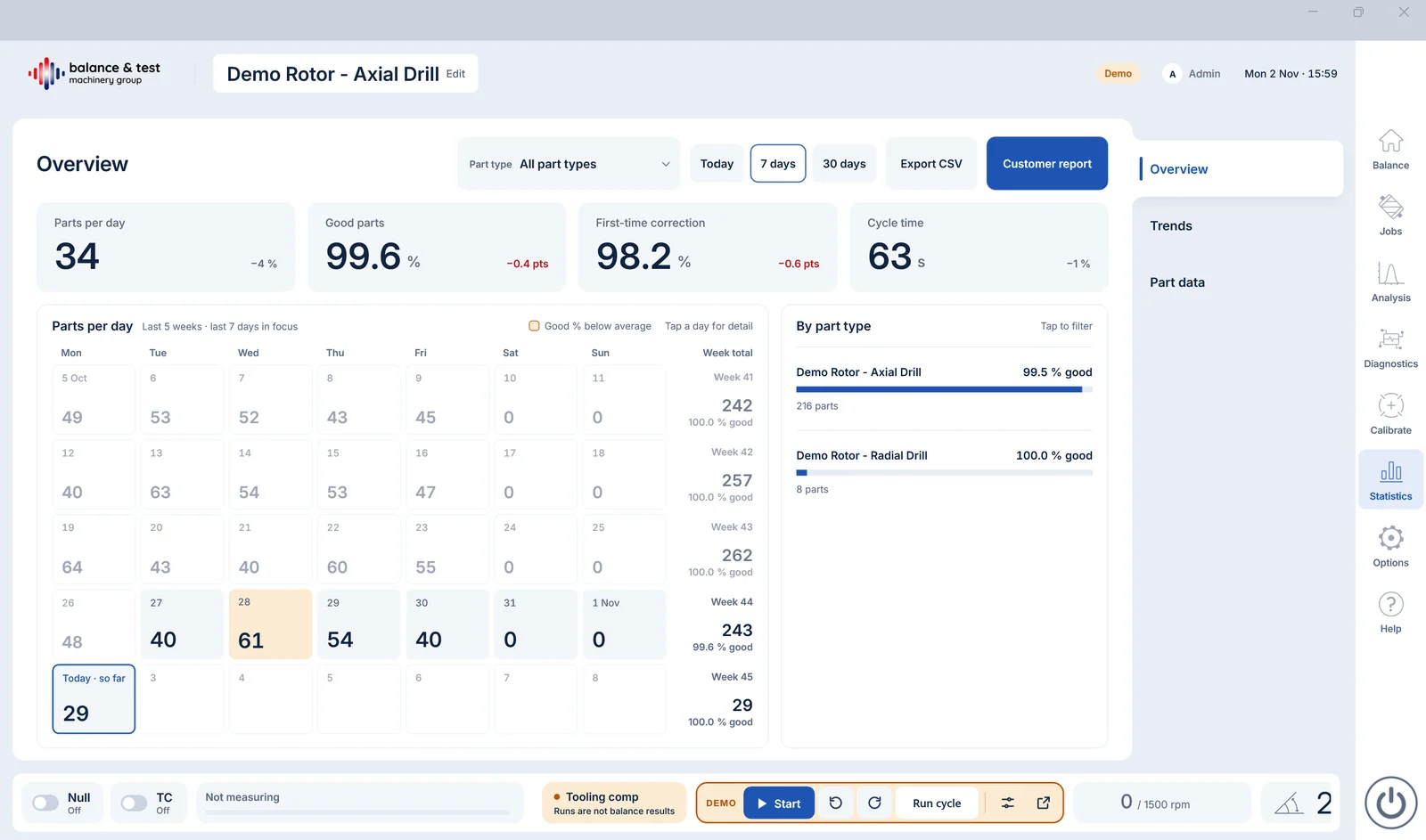
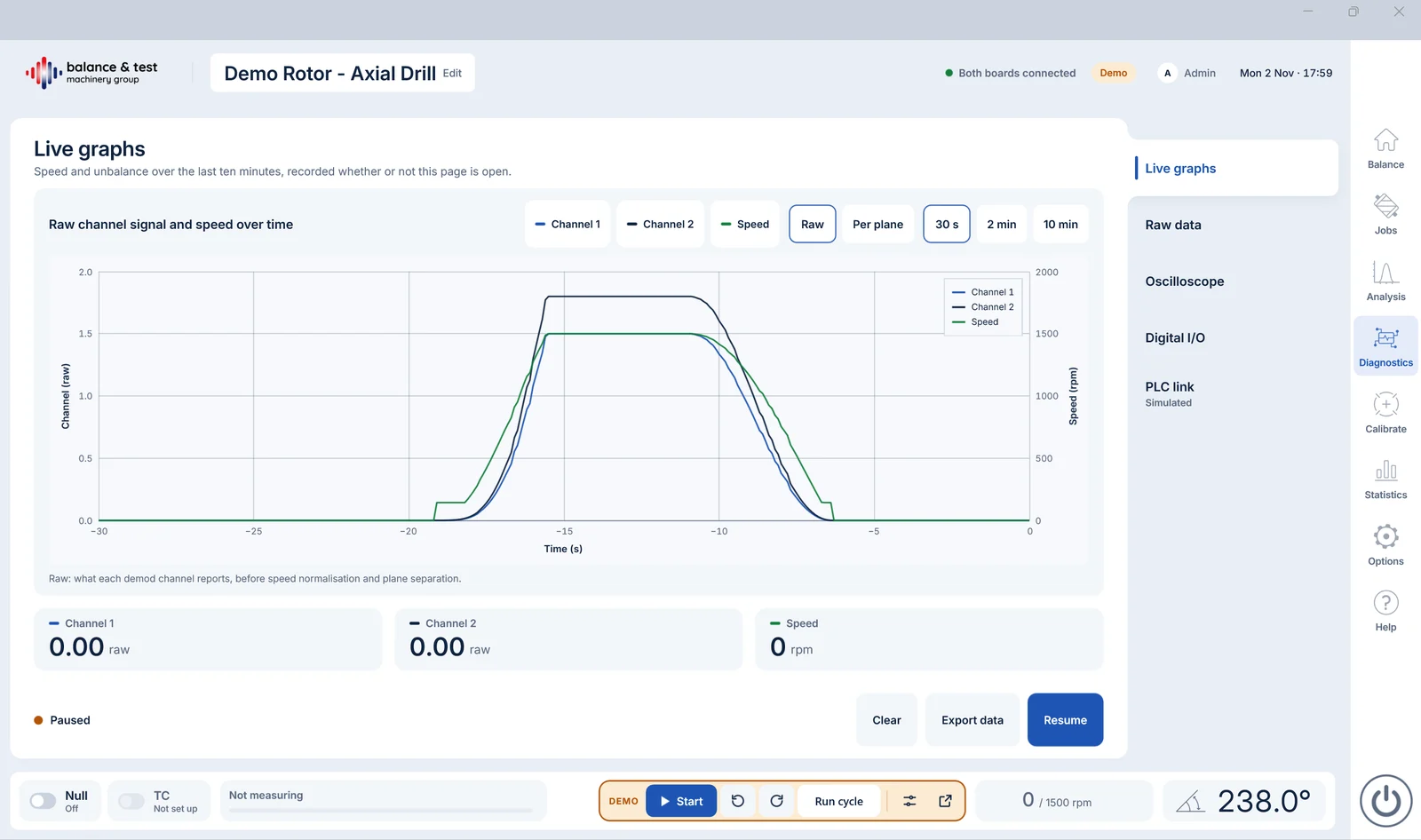
01 / 06
Each correction plane has its own polar display, with the unbalance amount, angle and correction in large, easy-to-read figures. During correction, every hole appears with its depth and angle and turns green once drilled.
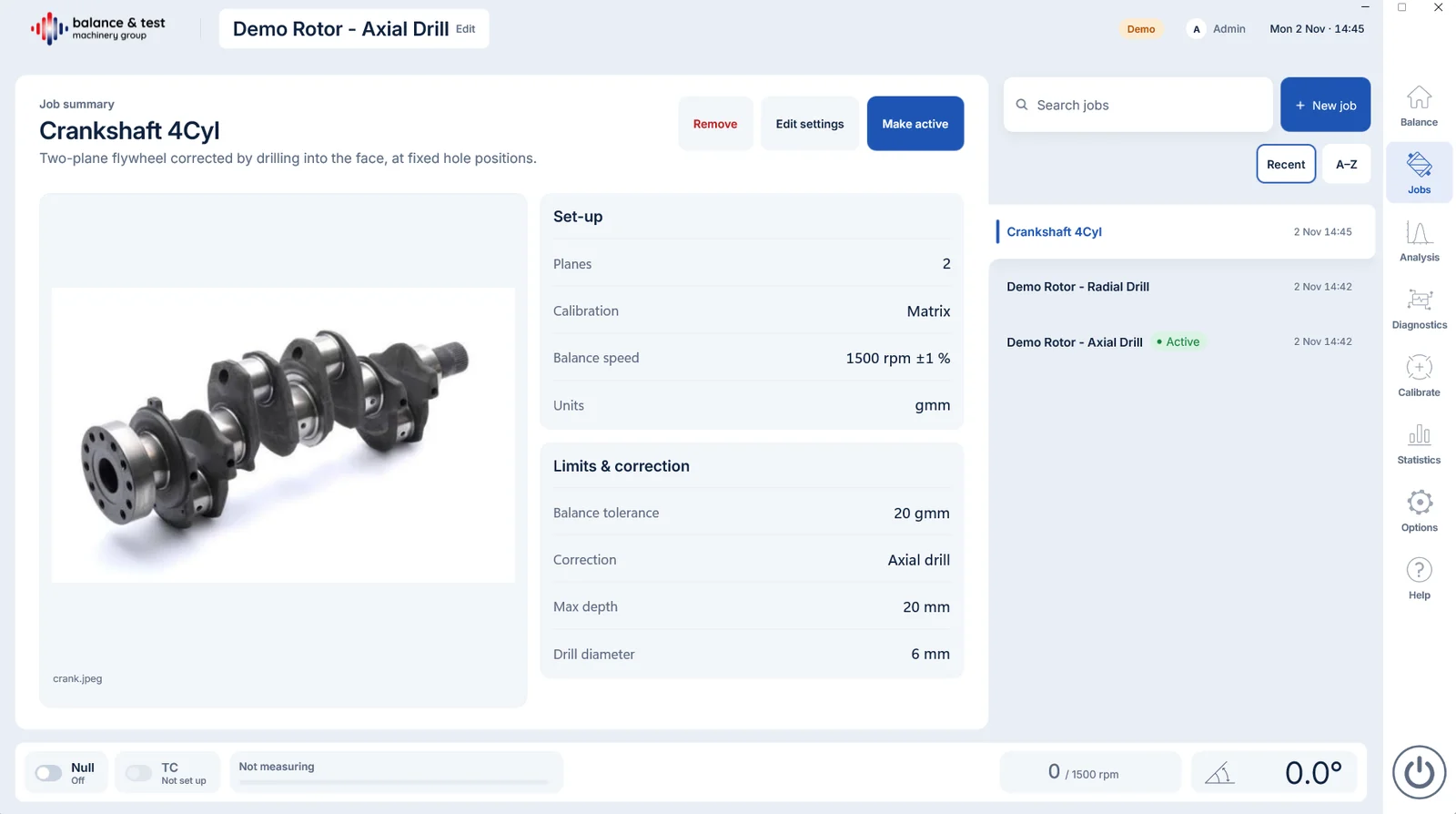
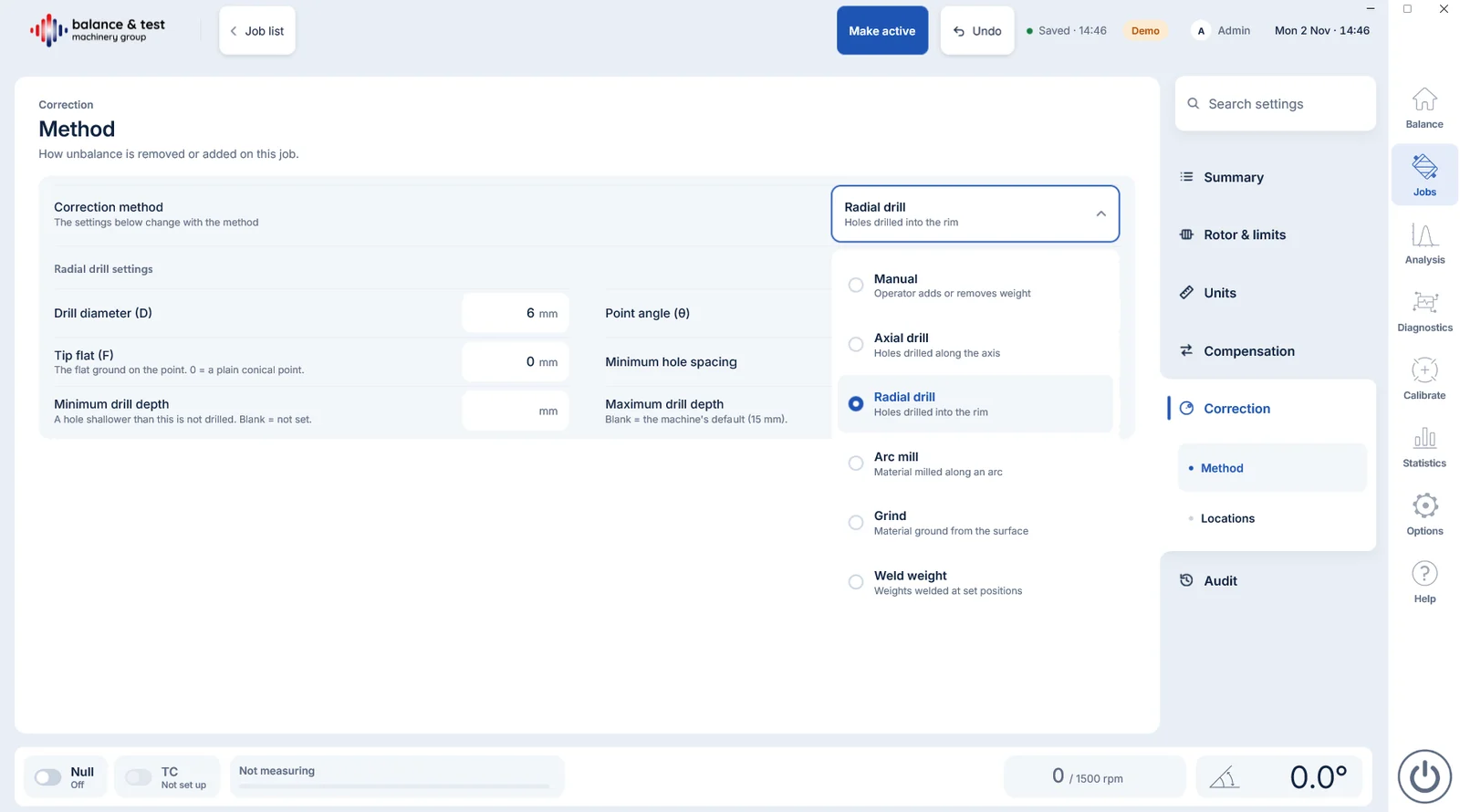
The real UltraX software balancing a demo rotor: measure, drill, re-measure.
Specifications
The numbers.
| Model | V1.5 | V5 | V16 | V42 | V65 | V100 | V200 | V300 |
|---|---|---|---|---|---|---|---|---|
| Maximum rotor weight - including tooling (kg) | 1.5 | 5 | 16 | 42 | 65 | 100 | 200 | 300 |
| Maximum rotor diameter (mm) | 120 | 280 | 500 | 500 | 700 | 1000 | 1200 | 1500 |
| Maximum rotor thickness (mm) | 60 | 70 | 160 | 160 | 200 | 250 | 250 | 250 |
| Minimum achievable residual unbalance gmm/kg | 0.5 | 0.5 | 1 | 1 | 3 | 5 | 5 | 5 |
| URR (%) | 95 | 95 | 95 | 95 | 95 | 95 | 95 | 95 |
| Drive power (kW) | 0.2 | 0.4 | 1.5 | 1.5 | 3 | 3 | 4.5 | 5.5 |
| Balance speed (rpm) — max balance speed presettable | 3000 | 2400 | 1250 | 1250 | 960 | 760 | 760 | 550 |
Scroll sideways for all 8 models
Non-standard specifications available.
| Model | NR5 | NR20 | NR50 | NR100 | NR200 | NR500 |
|---|---|---|---|---|---|---|
| Maximum rotor weight - including tooling (kg) | 5 | 20 | 50 | 100 | 200 | 500 |
| Maximum rotor diameter (mm) | 280 | 500 | 500 | 700 | 1000 | 1500 |
| Maximum rotor thickness (mm) | 70 | 160 | 160 | 200 | 250 | 250 |
| Minimum achievable residual unbalance gmm/kg | 0.5 | 1 | 1 | 3 | 5 | 5 |
| URR (%) | 95 | 95 | 95 | 95 | 95 | 95 |
Scroll sideways for all 6 models
Non-standard specifications available.
Why Balance & Test
Service that delivers.
Industry leading on new machines.
Installation and operator training included as standard.
Plus local service teams.
Head office and service center in Bristol, UK; service and support in Ann Arbor, Michigan; engineering, manufacturing and support in Spain; sales and support in Germany.
Balancing machines and all our equipment are built to CE, UL or CSA standards, to suit your market.
We service and calibrate balancing machines from any manufacturer.
FAQ
All grinding wheel balancers are built to CE, UL or CSA standards to suit your market, and every machine is proved to ISO 21940-21 before shipment.
It depends on the wheel and the production requirement. Grinding wheel balancers are static (non-rotating) machines or vertical rotating machines, and most wheels are balanced in a single plane. Many machines are used for audit, measuring and grading wheels, and correction can be added where required. Our engineers will recommend the configuration that suits your wheels.
For high-speed or precision grinding, correction can be made by drilling the hub or flange, or by filling with balancing compound. Where wheels are only audited and graded, the machine measures without correcting, and the software's data logging records and exports results for reporting, traceability and quality control, with a balance certificate printed directly from the software.
Yes. Grinding wheel balancers are often integrated into production lines, with loading and unloading automated through robotic systems or conveyor-based handling, giving high throughput while keeping process control and consistency. For higher volumes, automatic chucks deliver repeatability, speed and reduced operator intervention, while simple solid mandrels are typically sufficient for low-volume work.
Related machines
Also worth a look.
Balancing
Ensure vibration-free performance for grinding, milling, and router spindles. Our balancers guarantee accuracy and repeatability ensuring a…
View spindle balancersBalancing
Simple static balancing machines for disc-type rotors — manual and automatic options, backed by up to a 3-year…
View static balancersGuide
The facts about your parts that decide the machine.
Read the guideReady to balance better?
We’ll configure the right grinding wheel balancing machine for your technical needs and budget.