Powertrain
Powertrain test stands
For engines, hybrid systems, e-axles and complete drivelines.

Engines, e-motors, e-axles and transmissions
Test stands, test beds and test benches for engines, electric motors, e-axles, transmissions and rotating components, supplied as complete systems from the mechanical rig and dynamometer through to data acquisition, automation and reporting. Modular, open-architecture stands work with Siemens, Rockwell, NI and dSPACE, backed by up to a 3-year warranty.
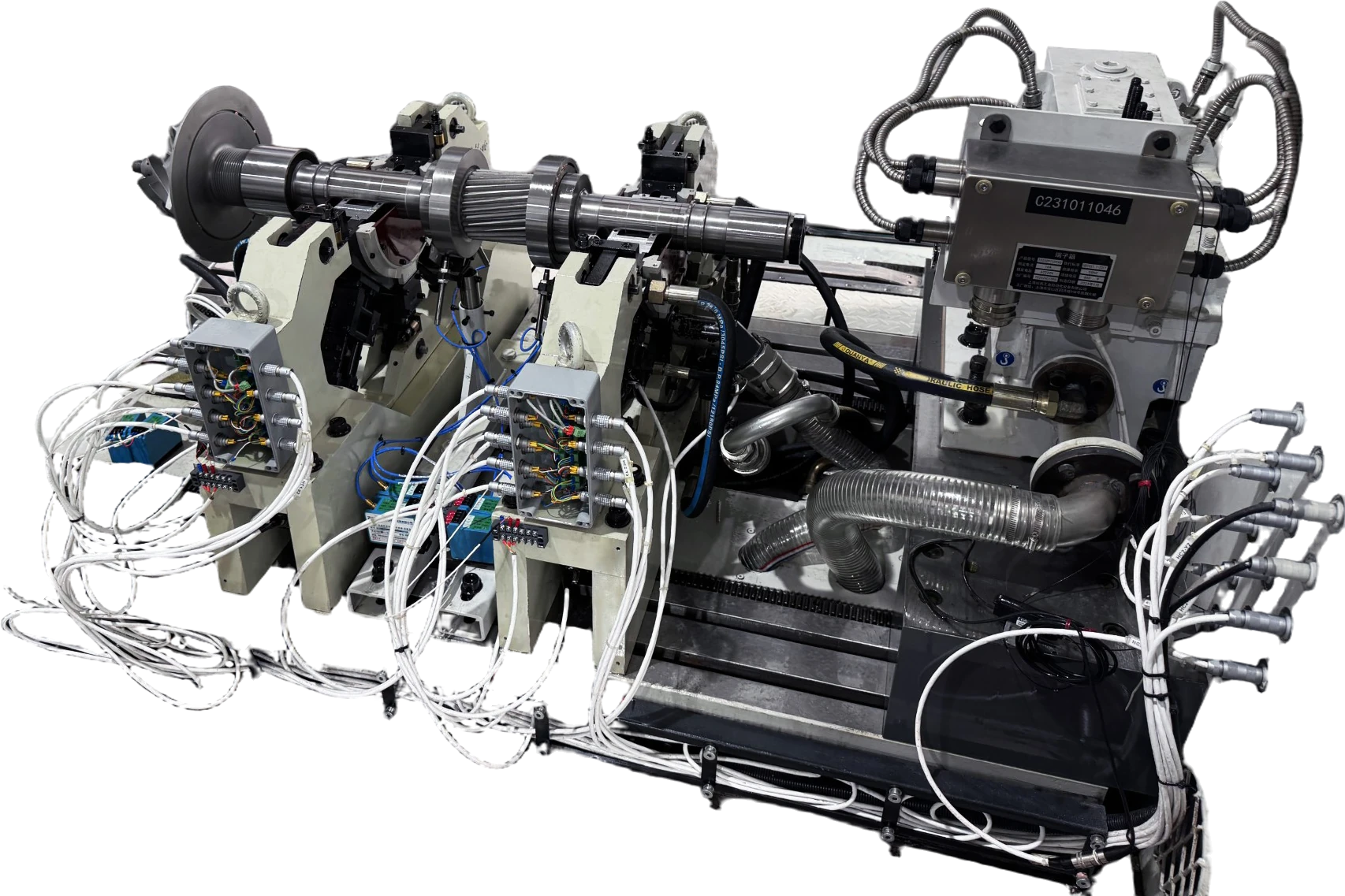
By application
Four types of stand.
Each page explains what is tested, what is measured and what we need to know to quote.
Powertrain
For engines, hybrid systems, e-axles and complete drivelines.
E-motor
For electric motors and inverters: efficiency maps, thermal cycling and tuning.
Gearbox
For shift quality, gear noise and endurance.
Production
For automated pass/fail testing on a production line, with full traceability.
We also provide component test rigs for bearings, gears, shafts, pumps, CV joints and clutches.
Complete systems
More than a dynamometer.
A test stand is more than a dynamometer on a bedplate. We provide the complete system: mechanical rig and dynamometer, safety, drives, data acquisition (DAQ), hardware-in-the-loop (HIL), automation and reporting.
| Part of the system | What it includes |
|---|---|
| Load and actuation | Eddy-current, AC and PM dynamometers; torque transducers; shift and park actuation; brake simulation |
| Power electronics | 4-quadrant drives, regenerative supplies, high-voltage battery simulation |
| Sensing and DAQ | Torque, speed, vibration, strain, pressure and thermal sensors, with synchronous time stamping |
| Control and automation | PLC/IPC control, safety PLC, HIL interface (CAN, LIN, FlexRay, EtherCAT) |
| Software | Recipe-based test plans, dashboards, automated reporting |
| Safety | Guarding, interlocks, SIL/PL risk reduction, fire suppression options |
Modular
Start small. Add later.
Start with a base test bench, then add torque ranges, environmental options, NVH or end-of-line automation when the program needs them.
Open architecture
Keep your platform.
Our test stands support Siemens, Rockwell, NI, MATLAB/Simulink and dSPACE. Your controls team can keep the platform it already uses, and you are not tied to one supplier for later changes.
Test types
Six kinds of test.
| Test type | Examples |
|---|---|
| Performance | Torque/speed maps, efficiency islands, coast-down |
| Durability | Endurance cycles, load spectra, thermal cycling |
| Calibration and characterization | Motor/inverter tuning, sensor correlation |
| NVH | Order tracking, torsional vibration, gear whine, aerospace acoustic qualification |
| Shift quality | Gearshift timing, synchro analysis, clutch control |
| End-of-line pass/fail | Leakage, drag torque, current draw, vibration, backlash and efficiency thresholds |
Industries
Road, air and industry.
Tested for performance.
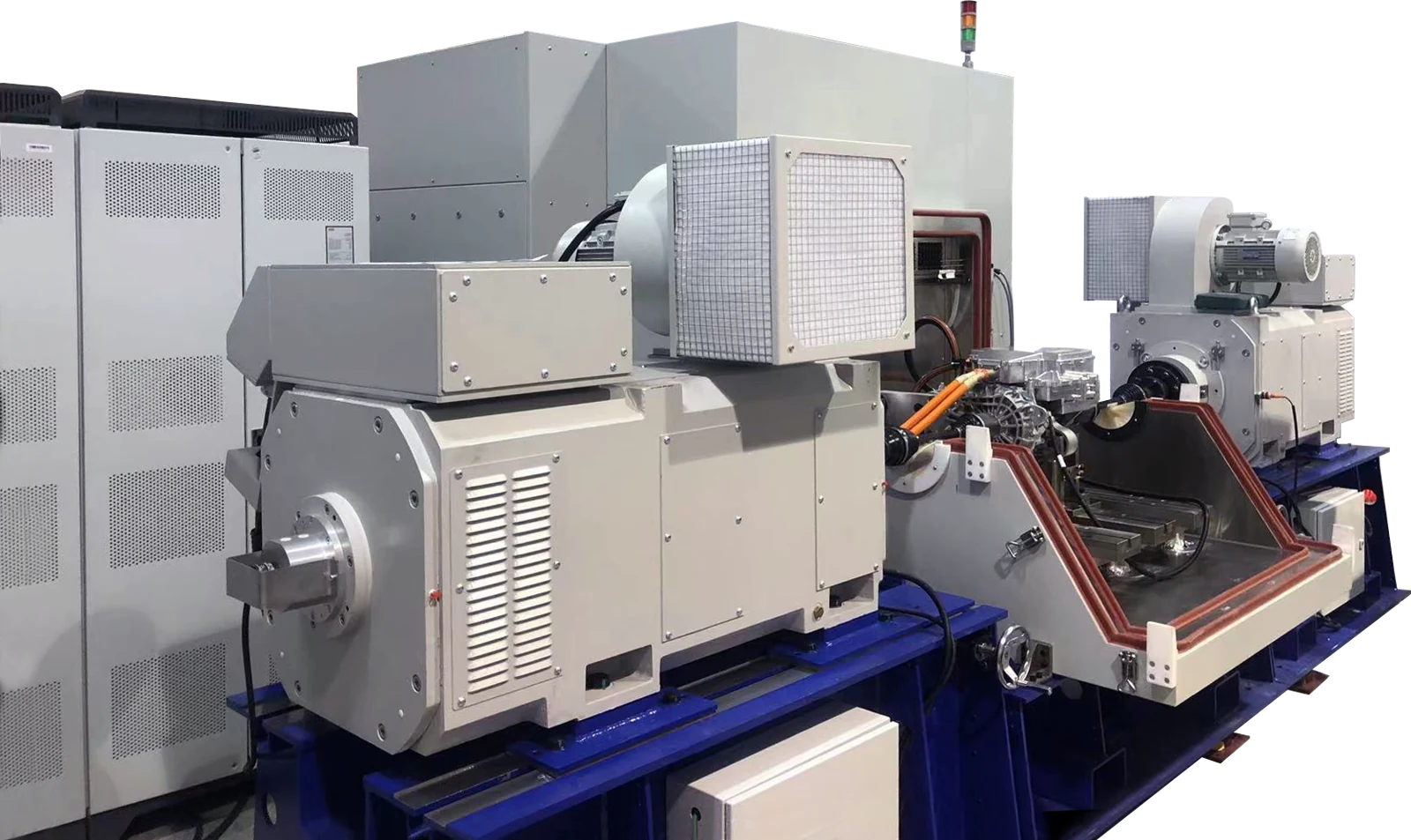
Engine, hybrid and EV drivelines
Powertrain test stands and test benches for combustion, hybrid and electric drivelines, from a single engine dyno to a complete e-axle rig. We supply the whole system: dynamometers, power electronics, battery simulation, measurement, HIL control and safety. Stands are modular, so you can add torque ranges, environmental options or NVH later, backed by up to a 3-year warranty.
What it does
The road, on a bedplate.
A powertrain test stand runs an engine, e-axle or complete driveline under controlled load without a vehicle around it. Dynamometers take the place of the road: they absorb the power the unit produces and, on a driven stand, feed power back in to reproduce overrun and regenerative braking. Torque and speed are measured at each shaft, so the same drive cycle can be repeated exactly and two builds can be compared on equal terms.
Electric motors and inverters
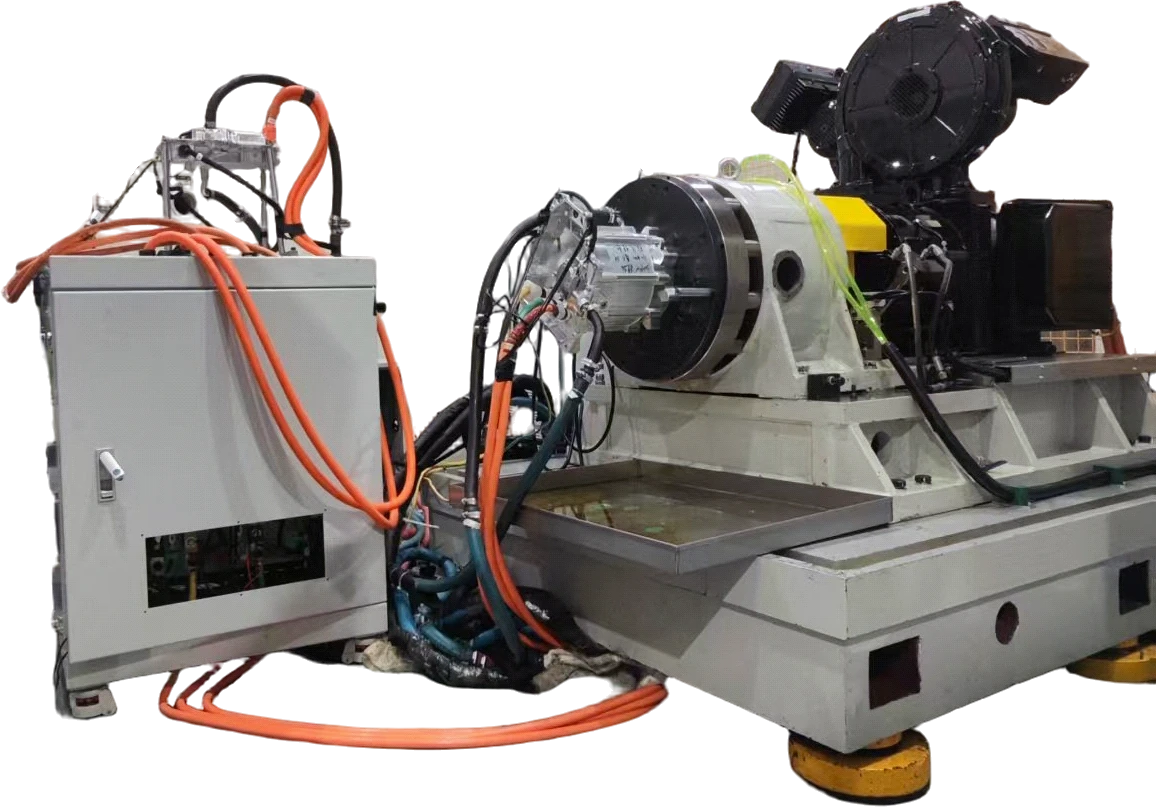
E-motor test benches for electric motors and inverters, tested separately or as a pair, in development and in production. Stands produce efficiency maps, run thermal cycling and support motor/inverter tuning, with high-voltage battery simulation and a HIL interface. PMSM, induction, axial flux and wound-rotor motors are covered, backed by up to a 3-year warranty.
Efficiency mapping
Every point, measured.
An efficiency map is a grid of operating points. At each one the bench holds speed and torque steady, then records shaft power and electrical power. The ratio is the efficiency at that point, and the full grid shows where the motor runs best: the "efficiency islands".
Our stands produce torque/speed maps and efficiency islands with synchronous time stamping across torque, speed and thermal sensors.
Development, endurance and production
Gearbox test stands and transmission test benches for development, endurance and production, from vehicle transmissions to industrial and aerospace gearboxes. Stands measure torque, speed, losses, shift quality and gear whine, with loading up to 2 MW in our industrial gearbox configuration. Each is supplied as a complete system, with installation, commissioning and up to a 3-year warranty.
How it works
Drive in, load out.
A gearbox has an input and at least one output, so it is tested between two or more machines: one drives the input in place of the engine or motor, and one loads each output in place of the wheels or the driven machine. Torque and speed are measured on both sides. The difference between power in and power out is the loss in the gearbox, and the vibration and noise it makes under load show the condition of the gears and bearings.
For production lines
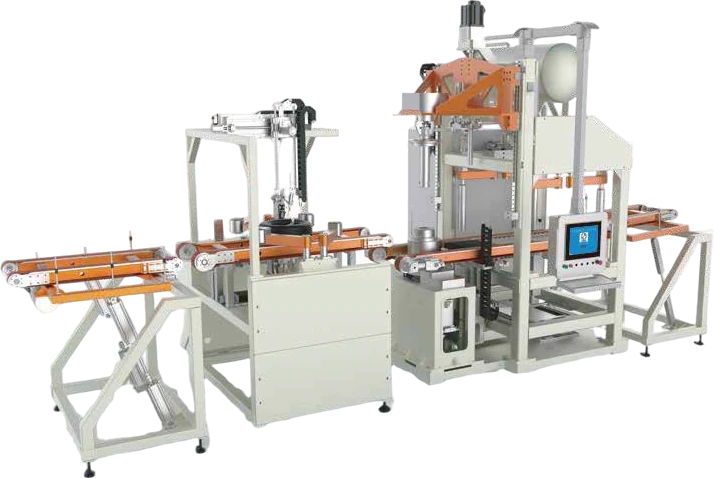
End-of-line test stands and EOL test benches that check every unit before it leaves the line: automated pass/fail testing with full traceability. Stands check leakage, drag torque, current draw, vibration, backlash and efficiency against set limits, store each result against the serial number and connect to MES and ERP. Backed by up to a 3-year warranty.
Checks
Six checks, six limits.
Each check is compared with a threshold set in the test plan.
| Check | What a failure usually points to |
|---|---|
| Leakage | A seal, gasket or casting fault |
| Drag torque | Bearing preload, seal friction or a misassembled part |
| Current draw | An electrical or winding fault, or excess friction |
| Vibration | Unbalance, a damaged bearing or a gear fault |
| Backlash | Gear spacing or shimming outside tolerance |
| Efficiency | Losses higher than the design allows |
Test, balance, straighten
Balance first, then test.
Parts that go on a test stand have usually been balanced first. We build the balancing machines as well.
Balancing
Balancing
Balancing
Straightening
Guide
Tight tolerances at high speed, and how they are met.
Read the guideWhy Balance & Test
Service that delivers.
On all equipment.
Installation and commissioning of the complete stand.
Calibration as part of our service offer.
Maintenance plans scheduled around your production.
Remote diagnostics over a secure connection, plus local service engineers.
All our equipment is built to CE, UL or CSA standards, to suit your market.
FAQ
The whole system: mechanical rig, dynamometer, safety, drives, DAQ, HIL, automation and reporting.
Yes. The stands are modular. Start with a base test bench and add torque ranges, environmental options, NVH or end-of-line automation later.
The stands support Siemens, Rockwell, NI, MATLAB/Simulink and dSPACE, with links to MES and ERP.
Up to three years on all equipment.
Typically 40 to 50 weeks from order to factory acceptance test for a bespoke stand, plus shipping and installation. Smaller benches are quicker.
We provide stands for all three. One stand can cover more than one where the dynamometers, power supply and controls are sized for both; the usual differences are fuel and exhaust handling for combustion and a battery simulator for electric.
One e-axle configuration runs to 25,000 rpm and 6,000 Nm with an 800 V battery simulator.
Yes. High-voltage battery simulators and charging interfaces are available.
Yes. We provide e-motor, inverter and e-axle rigs, with high-voltage battery simulation.
PMSM, induction, axial flux and wound-rotor motors. Each bench is configured for the motor's speed, torque, voltage and cooling.
Yes. Our transmission development rig uses a shift robot with gearshift analytics and clutch pressure control.
Yes. Testing is automated, with pass/fail thresholds for leakage, drag torque, current draw, vibration, backlash and efficiency.
Ready to test?
Tell us what you need to test and the torque, speed and power involved, and an engineer will come back to you. UK +44 117 405 4011 · USA +1 616 377 1077.