Driveshafts require multi-plane dynamic balancing to eliminate vibration, extend bearing life and ensure smooth performance.
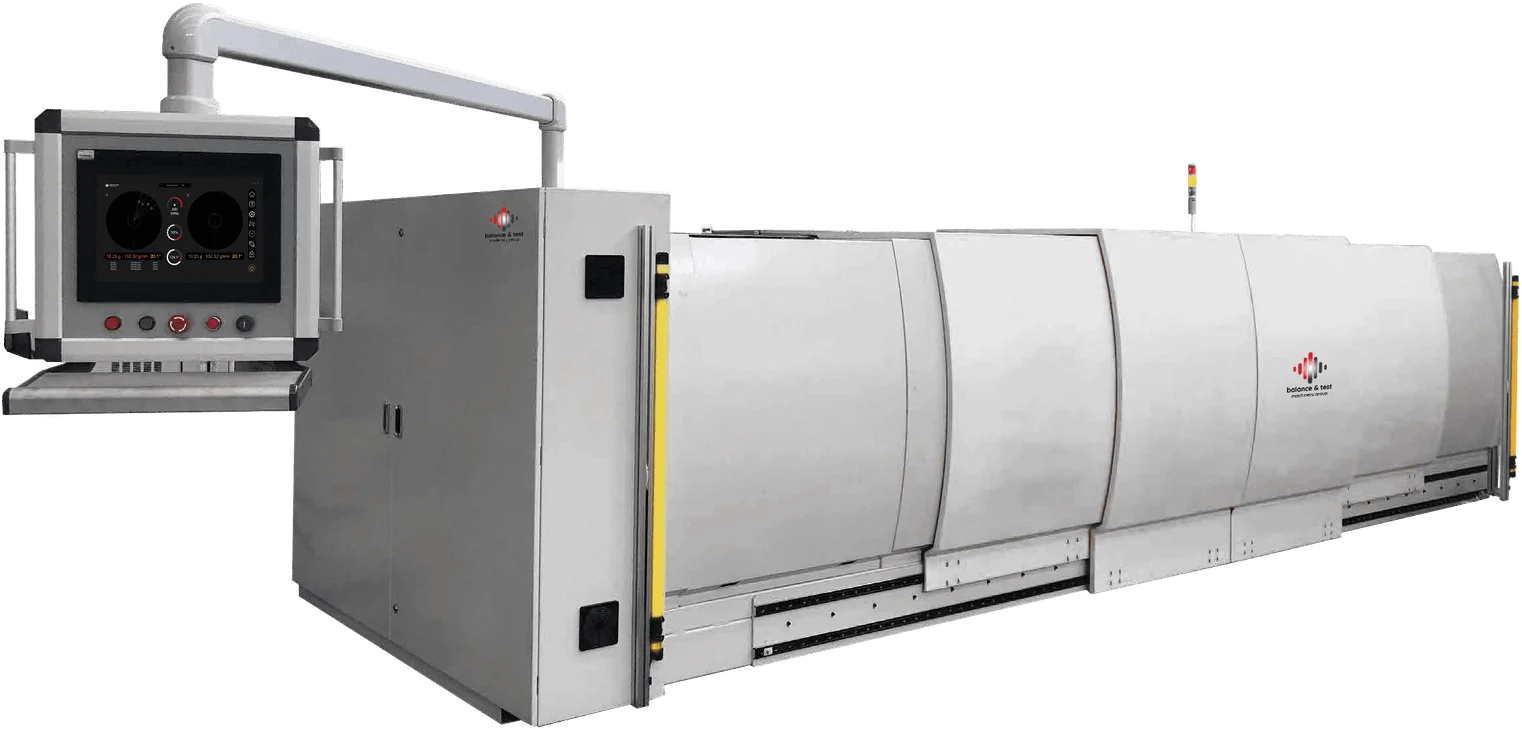
Driveshafts are balanced on horizontal soft-bearing machines, driven through the end fitting by the headstock spindle, with a tailstock at the other end and an intermediate support at each centre bearing. Whether you call it a driveshaft, a drive shaft, a propshaft or a cardan shaft, the balancing requirement is the same: multi-plane correction at or near service speed.
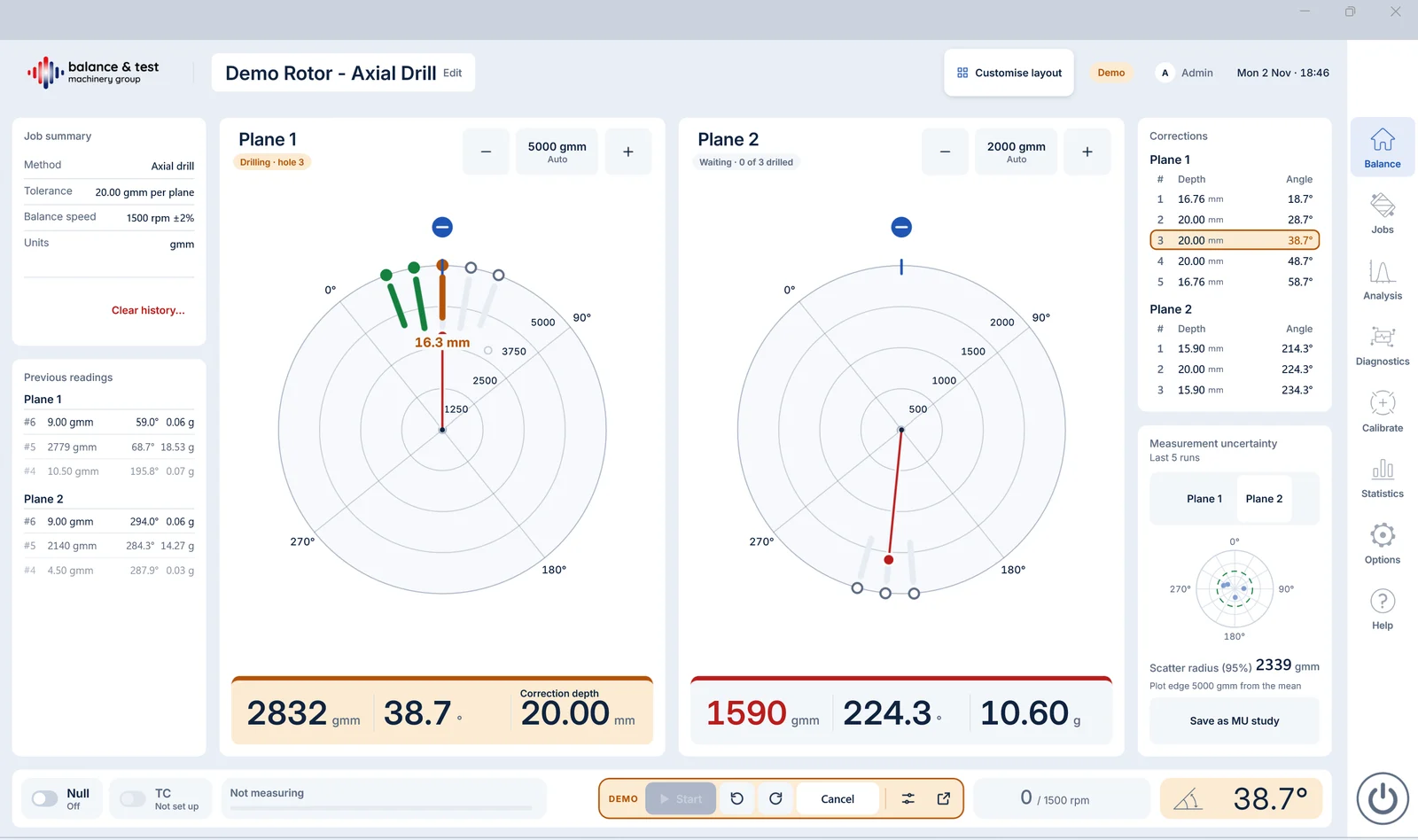
The shaft is loaded and clamped, spun, and its unbalance measured in each correction plane. The measuring system gives the correction for each plane against the ISO tolerance. Weights are welded on automatically on OEM machines, or with optional integrated welding on manual and semi-automatic machines, and the result is logged with a balance certificate.
Automatic light-vehicle OEM machines run the whole cycle: barcode identification, automatic clamping, measurement in 2, 3 or 4 planes with laser runout, automatic weld-on correction, paint marking and unloading, with every result recorded for traceability.
Related machines: crankshaft balancing machines, axle balancing machines and shaft straightening machines.